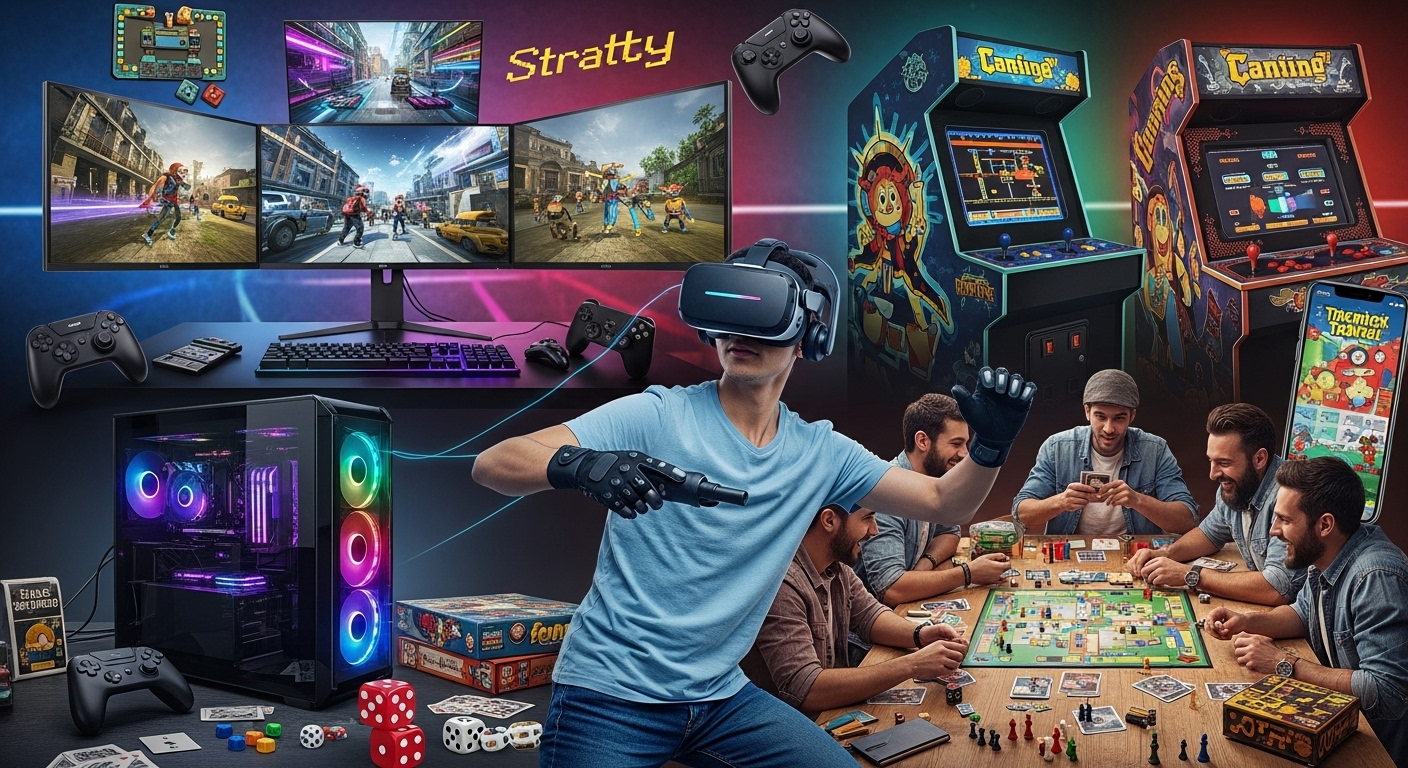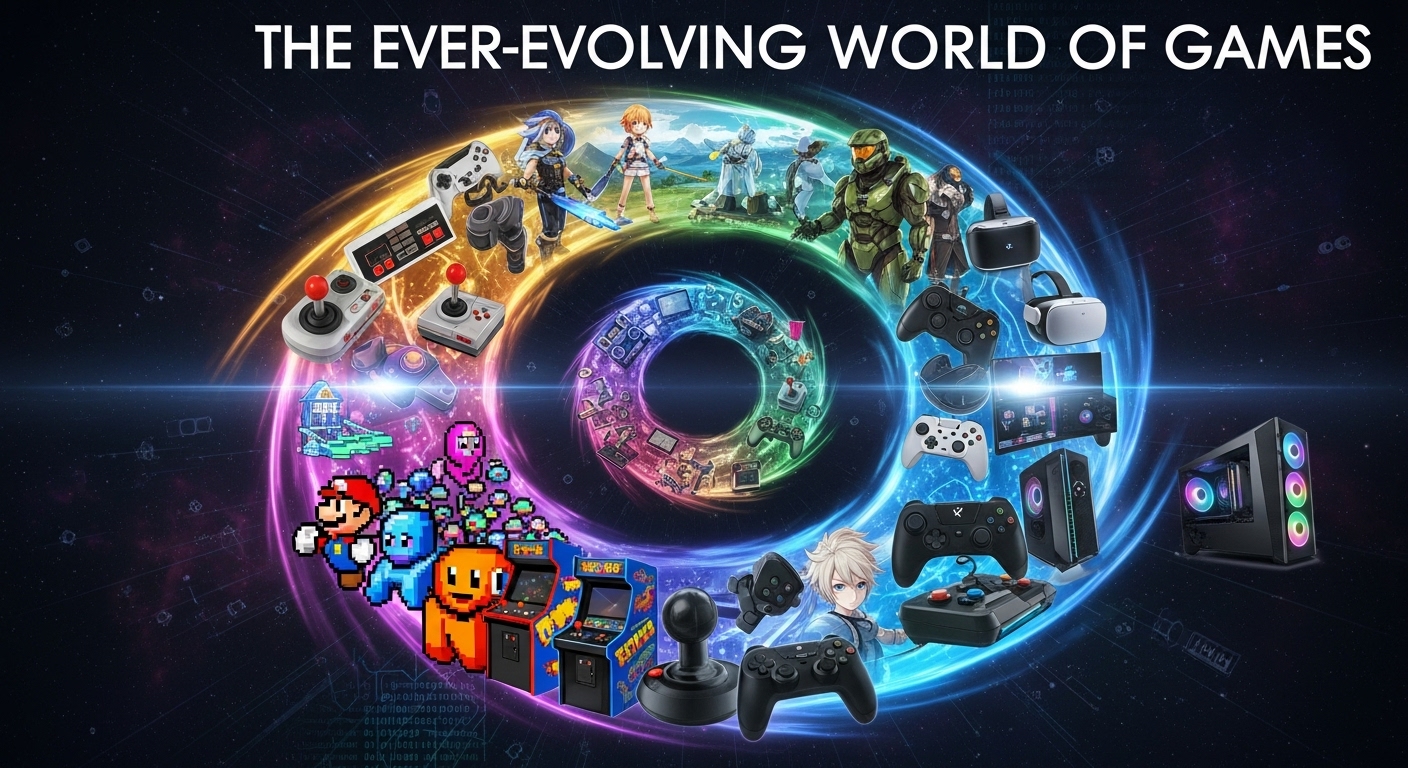

Gaming has become a fundamental part of modern culture. From its humble beginnings in the mid-20th century to the cutting-edge experiences we enjoy today, video games have undergone dramatic changes in terms of technology, storytelling, and gameplay. Today, gaming is not just an entertainment medium but a global phenomenon that touches millions of lives. This blog post will explore the evolution of gaming, from its inception to the modern era, highlighting the key moments, innovations, and cultural impacts that have shaped the gaming world.
The Origins of Gaming: The 1950s and 1960s
The journey of video games began in the 1950s and 1960s, when early pioneers in computing and entertainment started experimenting with interactive technologies. One of the first known video games was Tennis for Two, created by physicist William Higinbotham in 1958. This rudimentary game allowed players to control paddles on a screen and engage in a simple tennis match, using an oscilloscope as the display.
However, it wasn’t until 1962 that a game would be widely recognized as one of the first video games that laid the foundation for the industry. Spacewar!, created by Steve Russell at MIT, became a groundbreaking project. The game featured two players controlling spaceships while trying to destroy each other by shooting missiles, all while navigating the gravitational forces of a star in the center of the screen. This early title is widely considered one of the first true video games, setting the stage for what would follow.
Despite these early efforts, it wasn’t until the early 1970s that video games would begin to gain real popularity, thanks in large part to the advent of arcade games.
The Birth of the Arcade Era: The 1970s
The 1970s marked the commercial beginnings of the video game industry, with the introduction of arcade machines and the development of the first commercially successful video game. In 1972, Nolan Bushnell and Ted Dabney, founders of Atari, released Pong, a simple yet highly addictive simulation of table tennis. The game quickly became a hit in arcades and would go on to establish Atari as one of the dominant forces in the gaming world.
As arcade games gained popularity, other companies began to join the fray, and the video game market began to explode. By the mid-1970s, many arcade machines, such as Space Invaders (1978), Asteroids (1979), and Pac-Man (1980), became cultural icons in their own right. These games introduced players to new types of gameplay, from shooting aliens to navigating mazes. These innovations helped define the early arcade experience and laid the groundwork for the more sophisticated games that would follow.
Arcades became the center of the gaming world during this time, and millions of players flocked to them to spend their quarters in search of high scores and bragging rights. The rise of arcade culture was crucial to the development of video games as a mainstream entertainment medium, but this was only the beginning.
The Golden Age of Home Consoles: The 1980s
The 1980s saw a shift from arcade machines to home consoles, making video gaming more accessible and widespread. The introduction of home gaming consoles, such as the Atari 2600 in 1977, marked the beginning of the gaming revolution in living rooms across the world. With the Atari 2600, players could enjoy arcade-style experiences at home, with popular titles like Space Invaders, Pong, and Asteroids ported to the console.
However, the real turning point in home gaming came with the release of the Nintendo Entertainment System (NES) in 1985. Nintendo’s NES was an immediate success, introducing millions of players to iconic franchises like Super Mario Bros., The Legend of Zelda, and Metroid. These games were groundbreaking in their design, offering players a level of immersion and storytelling that had previously been unattainable in home gaming. Super Mario Bros. alone became a cultural phenomenon, thanks to its creative level design, catchy music, and simple yet challenging gameplay.
During this time, gaming also started to reach a wider audience. No longer just a pastime for tech enthusiasts or children, video games began to attract adults and families. This demographic expansion helped establish gaming as a mainstream activity, and the NES’s success cemented Nintendo’s place as one of the most influential companies in gaming history.
The 1980s also saw the rise of arcade-style beat ‘em ups, side-scrollers, and sports games. Titles like Street Fighter II and Double Dragon offered multiplayer experiences, while other games such as Tetris and The Legend of Zelda introduced puzzle-solving and exploration to the mix. By the end of the decade, gaming had become a powerful force in entertainment, and the industry’s growth showed no signs of slowing down.
The 1990s: 3D Graphics, the Rise of PlayStation, and Online Multiplayer
The 1990s marked a significant shift in gaming technology, as developers began to experiment with 3D graphics, more advanced storytelling techniques, and the first glimpses of online multiplayer gaming. This period also saw the birth of some of the most iconic gaming franchises that are still popular today.
In 1994, Sony launched the original PlayStation, which would go on to revolutionize the gaming industry. The PlayStation’s 3D capabilities allowed for more complex and visually stunning games, such as Final Fantasy VII, Gran Turismo, and Metal Gear Solid. These games pushed the boundaries of what was possible in terms of graphics, narrative, and gameplay, helping establish Sony as a major player in the console market.
Meanwhile, Nintendo had its own powerhouse in the Nintendo 64, released in 1996. The N64 brought the world games like Super Mario 64, The Legend of Zelda: Ocarina of Time, and GoldenEye 007. These titles set new standards for open-world design, platforming, and multiplayer gaming, respectively. Super Mario 64 is often credited as one of the best 3D platformers ever created, and its success was a key factor in establishing 3D gaming as the new standard.
The 1990s also witnessed the first wave of online gaming, with PCs and consoles connecting players for competitive and cooperative play. In 1997, StarCraft introduced real-time strategy games with multiplayer support, while Quake and Unreal Tournament popularized first-person shooters with online multiplayer modes. These games paved the way for the online multiplayer experiences that would dominate the 2000s and beyond.
By the end of the 1990s, video games were no longer just about fun and competition. The gaming industry had grown into a serious cultural and economic force, with millions of players, major companies, and dedicated fan communities.
The 2000s: Online Multiplayer, Mobile Gaming, and the Rise of Casual Gamers
The 2000s were a pivotal time for video games, as they became more immersive and accessible than ever before. Broadband internet connections allowed players to connect with others around the world, and online multiplayer gaming became a dominant force.
In 2001, Microsoft launched the Xbox, and with it, Halo 2—a game that defined online console gaming. Halo 2 allowed players to connect to Xbox Live, Microsoft’s online gaming service, and engage in intense multiplayer battles. This was a breakthrough moment for console gaming, as it marked the beginning of the era of online play, where players from around the world could engage in competitive matches.
Meanwhile, Sony’s PlayStation 2 continued to dominate with its expansive library of games, including Grand Theft Auto: San Andreas and Final Fantasy X. The PS2’s success helped solidify Sony as a leading force in the gaming industry during this period.
In addition to traditional gaming consoles, the 2000s saw the rise of mobile gaming. The launch of Snake on Nokia phones was one of the first signs that mobile gaming could reach a broad audience. Later, the introduction of smartphones and app stores paved the way for a massive increase in mobile gaming. Casual games like Angry Birds, Candy Crush, and FarmVille attracted millions of new players, many of whom had never played traditional console or PC games. This shift in gaming culture brought a more diverse demographic into the fold, with a growing number of female players and older adults engaging in gaming.
The 2000s also saw the rise of indie gaming, with smaller studios developing unique and innovative games. Titles like World of Goo, Braid, and Limbo demonstrated that small teams could create critically acclaimed games with deep narratives and gameplay mechanics. These indie games were often distributed digitally, helping usher in the digital distribution model that would dominate the next decade.
The 2010s: Open-World Games, Esports, and Virtual Reality
The 2010s ushered in a new era of gaming, characterized by the rise of open-world games, esports, and immersive technologies such as virtual reality (VR).
Open-world games like The Witcher 3: Wild Hunt, Red Dead Redemption 2, and Grand Theft Auto V offered players enormous, detailed worlds to explore, with complex narratives and freedom of choice. These games represented the pinnacle of sandbox-style design, allowing players to experience vast, living worlds that were constantly evolving.
Esports also exploded during the 2010s, with games like League of Legends, Dota 2, and Counter-Strike: Global Offensive drawing massive audiences and offering millions in prize money. Esports organizations and professional players became celebrities in their own right, and live-streaming platforms like Twitch helped fuel the growing popularity of competitive gaming.
Additionally, the 2010s saw the rise of virtual reality gaming. With the launch of devices like the Oculus Rift and PlayStation VR, players were given the opportunity to experience a completely new level of immersion. Games like Beat Saber and Half-Life: Alyx allowed players to physically interact with virtual worlds, marking the first steps toward the future of gaming.
The Future of Gaming: Cloud Gaming, AI, and the Metaverse
Looking forward, the future of gaming is filled with exciting possibilities. The rise of cloud gaming, powered by services like Xbox Cloud Gaming, Google Stadia, and NVIDIA GeForce Now, is making gaming more accessible than ever before. Players can now stream games on a variety of devices, including smartphones, tablets, and even low-end computers, without needing expensive hardware.
Artificial intelligence is also playing an increasingly important role in game design. NPCs are becoming more intelligent, responding dynamically to player actions, and creating richer, more immersive experiences. Additionally, AI-generated content, such as procedurally generated worlds and missions, is making games more varied and unpredictable.
The concept of the “Metaverse,” a virtual shared space where players can interact with each other and digital environments in real time, is also gaining traction. Games like Fortnite and Roblox have laid the groundwork for this vision, with large, persistent virtual worlds where players can socialize, compete, and create.
In the coming years, the continued development of VR and AR (augmented reality) technologies promises to push the boundaries of immersion, offering players even more lifelike and interactive experiences.
Conclusion
From its early days as a niche hobby to its current status as a global industry, gaming has evolved in remarkable ways. The journey from pixelated 2D games to vast open worlds, from the simplicity of Pong to the immersive experiences of VR, has been nothing short of extraordinary. As technology continues to advance, the future of gaming holds even greater potential for innovation and entertainment. Whether you’re a lifelong gamer or just getting started, there has never been a more exciting time to be part of the gaming world.