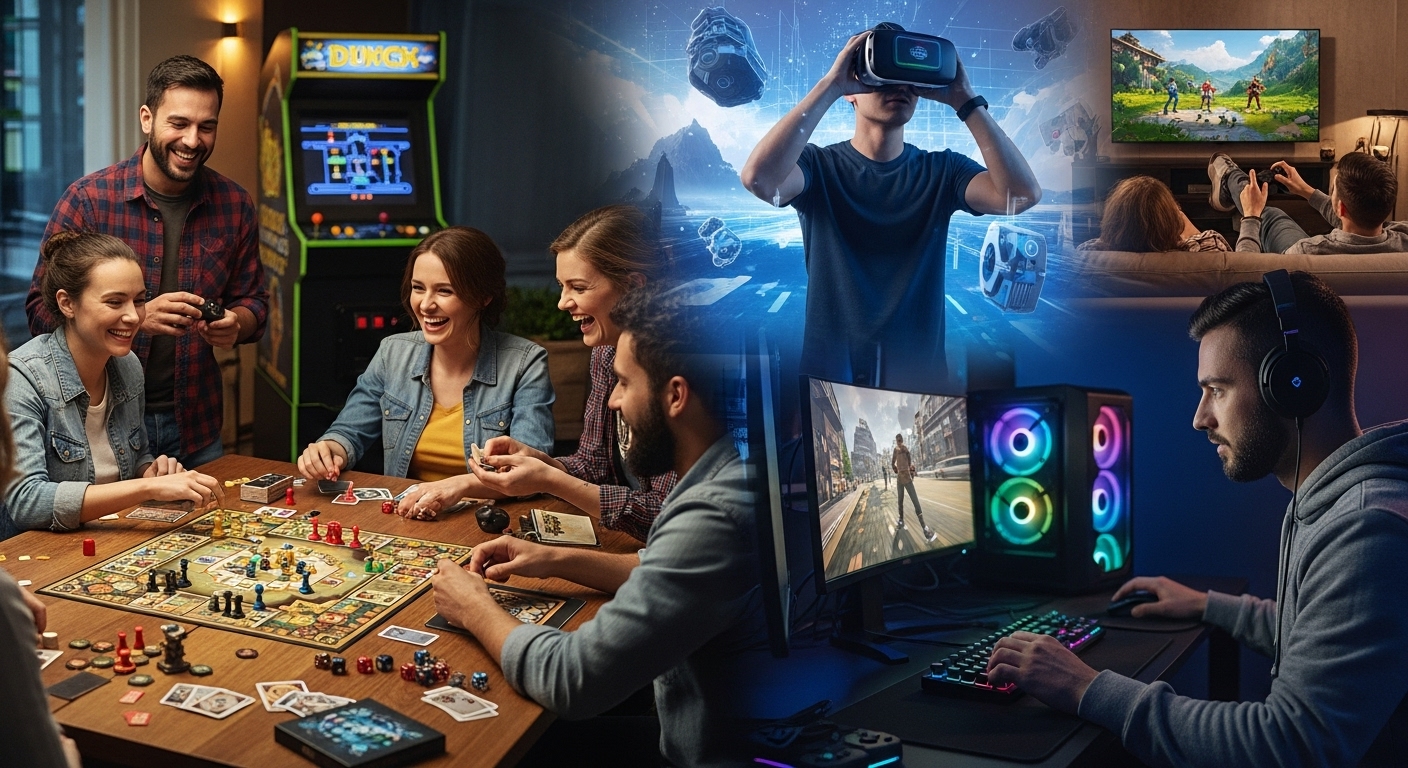

Introduction: The Timeless Appeal of Games
Games have been an integral part of human culture for centuries. They are more than just a pastime; they are a reflection of creativity, strategy, social interaction, and technology. From ancient board games to cutting-edge digital experiences, games provide entertainment, challenge, and even education.
In the modern era, gaming has become a global phenomenon, with millions of players engaging in various forms of games daily. Whether on a smartphone, console, computer, or in a physical space, games offer immersive experiences that go beyond mere amusement. This blog explores the history, types, technological advancements, cultural impact, and future of games, highlighting their significance in today’s society.
The Historical Journey of Games
The concept of games dates back thousands of years. Ancient civilizations created board games such as Senet in Egypt, Go in China, and chess in India. These early games combined strategy, luck, and social interaction, serving as entertainment while also teaching strategic thinking.
During the medieval period, card games and tabletop games became popular in Europe. They provided social interaction in homes and gatherings, establishing gaming as a communal activity.
The 20th century marked the advent of video games. Early arcade games such as Pong and Space Invaders introduced interactive digital play, while home consoles like the Atari 2600 and Nintendo Entertainment System brought gaming into households. This era laid the foundation for modern gaming, introducing mechanics and narratives that continue to influence designers today.
Different Types of Games
Games today come in diverse forms, catering to a wide range of audiences and interests.
Video Games: Video games are the most popular form of modern gaming. They span consoles, PC, and mobile platforms. Popular genres include action, adventure, role-playing, simulation, puzzle, and strategy. Games like The Legend of Zelda, Minecraft, and Fortnite have become cultural icons, blending storytelling, competition, and creativity.
Board Games: Despite the digital age, board games remain popular. Titles like Settlers of Catan, Ticket to Ride, and Pandemic provide strategic depth and social interaction. Board games often encourage cooperation, critical thinking, and problem-solving.
Card Games: Card games, including collectible card games like Magic: The Gathering and digital card games like Hearthstone, challenge players to develop strategies, anticipate opponents, and adapt to evolving scenarios.
Sports and eSports: Competitive games, whether physical or electronic, emphasize skill, strategy, and teamwork. eSports has elevated competitive gaming to professional status, with global tournaments, sponsorships, and dedicated fanbases.
Technological Advancements in Gaming
Technology has been a driving force behind the evolution of games. High-definition graphics, realistic physics engines, and artificial intelligence have enhanced immersion and interactivity.
Virtual reality (VR) and augmented reality (AR) are pushing boundaries further. VR allows players to experience fully immersive environments, while AR integrates digital elements into the real world. These technologies transform gaming from passive play to interactive experiences, providing a new level of engagement.
Cloud gaming and streaming services have made games more accessible. Players no longer need expensive hardware to enjoy high-quality experiences. Artificial intelligence in games creates adaptive challenges, personalizing gameplay to each player’s skill and preferences.
Mobile technology has further democratized gaming, enabling users to play anywhere. From casual puzzle games to competitive multiplayer titles, mobile platforms have expanded the reach and diversity of the gaming industry.
The Social and Cultural Impact of Games
Games are not just entertainment—they shape culture and social interactions. Online multiplayer games create global communities where players collaborate, compete, and communicate. Social interaction is often built into the gameplay, from co-op missions to guilds and teams.
Games also serve as mediums for storytelling and artistic expression. Modern titles explore complex narratives, moral choices, and emotional experiences. Games such as The Last of Us and Life is Strange demonstrate that games can rival books and films in narrative depth.
The rise of streaming platforms and content creation has amplified the cultural reach of games. Gamers share strategies, live-stream playthroughs, and build communities, turning gaming into both a participatory and spectator experience.
The Economic Significance of Games
The gaming industry has become a multi-billion-dollar global market. Revenue streams include game sales, subscriptions, in-app purchases, microtransactions, merchandise, and eSports tournaments. Free-to-play models attract players with optional purchases, providing income while maintaining accessibility.
Professional gaming careers have emerged, including players, content creators, developers, and commentators. The economic impact of gaming extends to technology, media, marketing, and software development, making it a vital sector in the global economy.
Games as Educational Tools
Beyond entertainment, games have educational value. Puzzle and strategy games enhance problem-solving, critical thinking, and planning skills. Simulation games teach concepts related to management, economics, and science.
Educational games also make learning interactive and engaging. Students can explore history, language, and mathematics through immersive experiences that encourage curiosity and creativity. By blending play with learning, games offer an alternative approach to traditional education methods.
Challenges in the Gaming Industry
While gaming has grown rapidly, it faces challenges. Addiction and excessive screen time can affect physical and mental health. Responsible gaming practices, parental controls, and educational resources are vital in promoting balanced engagement.
Diversity and representation remain areas for improvement. Historically, games have underrepresented women, minorities, and nonbinary individuals. Modern development increasingly emphasizes inclusivity, creating diverse characters, narratives, and gameplay experiences.
Cybersecurity is another critical challenge. Online gaming exposes players to hacking, fraud, and personal data risks. Developers must implement robust security measures to ensure safe and fair gaming environments.
The Future of Games
The future of gaming promises remarkable innovation and expansion. VR and AR will continue to create immersive, interactive experiences. AI-driven content generation will allow dynamic storylines, adaptive challenges, and personalized gameplay.
Cloud-based gaming and streaming platforms will remove barriers to entry, making high-quality experiences accessible to wider audiences. Blockchain and digital asset integration may redefine ownership, in-game economies, and trading systems.
Games will continue to influence culture, education, and social interaction. As technology evolves, games will become more integrated into daily life, offering not just entertainment but meaningful experiences that challenge, educate, and connect players globally.
Conclusion: Games as a Transformative Force
Games are more than a pastime—they are a reflection of creativity, technology, and culture. From ancient board games to modern digital experiences, games have evolved into immersive platforms that entertain, educate, and connect people worldwide.
The gaming industry demonstrates the power of innovation, community, and storytelling. It challenges players intellectually and emotionally, provides economic opportunities, and fosters social interaction.
In the modern world, games are an essential part of entertainment and culture. They represent human ingenuity, collaboration, and imagination. The journey of games is far from over; as technology and creativity advance, games will continue to shape entertainment, education, and social interaction for generations to come.