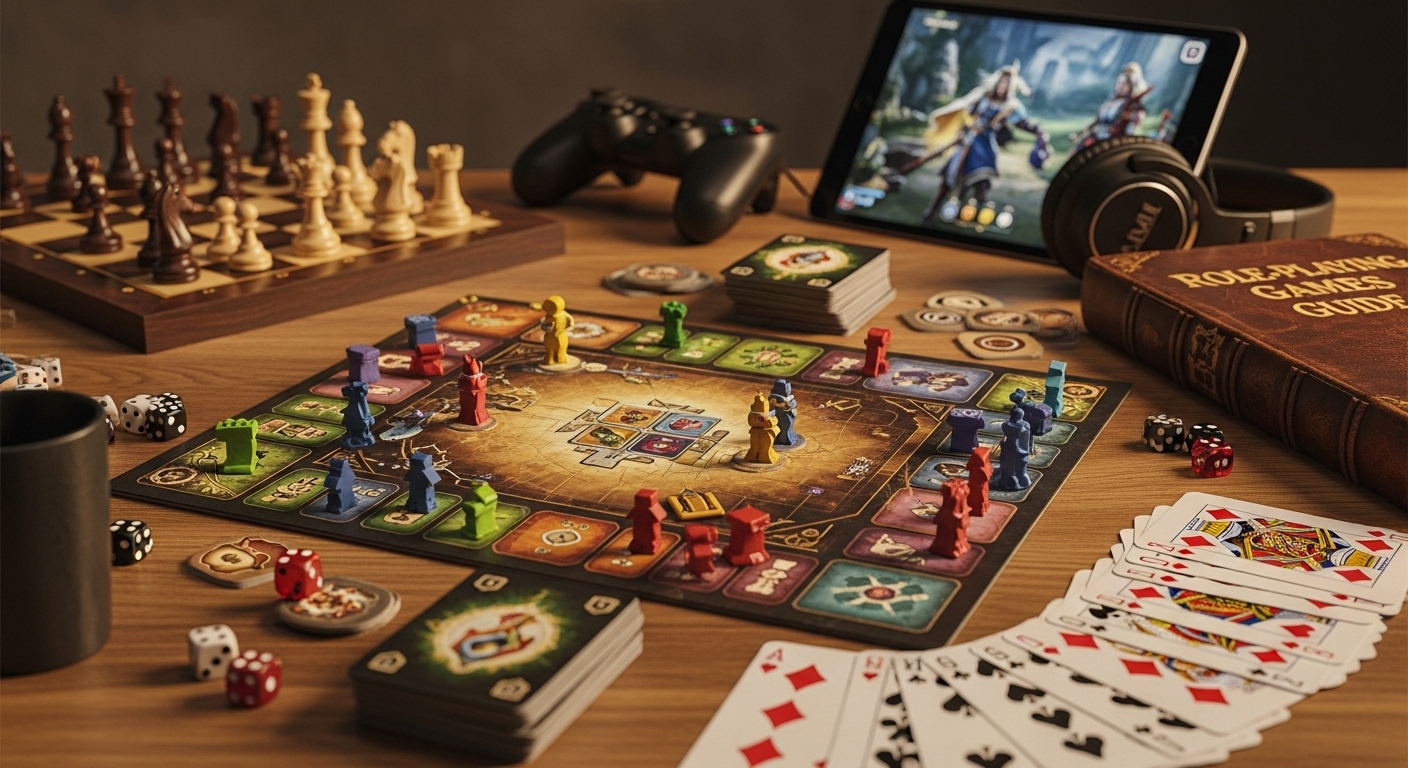
Games have always been more than just pastimes. They are windows into imagination, vehicles for social connection, and platforms for challenging our minds and reflexes. While most people are familiar with mainstream titles that dominate sales charts, there exists a universe of games that push the boundaries of creativity, mechanics, and storytelling. These games stand out because they are not merely entertaining—they are experiences that linger long after the screen goes dark. This article dives into the world of unique games that redefine the way we play.
The Rise of Indie Games and Experimental Gameplay
In the last decade, the rise of indie games has transformed the gaming landscape. Independent developers, often working with smaller budgets and fewer constraints, have the freedom to experiment with mechanics, narratives, and art styles that larger studios might consider too risky. Titles like Journey and Inside are examples of games that prioritize emotion and atmosphere over traditional objectives like points or rankings. Journey, for instance, allows players to explore vast, sand-swept landscapes, encountering other anonymous players along the way. The beauty of such games lies in their simplicity and emotional resonance, demonstrating that gameplay can be about feeling rather than just challenge.
Experimental gameplay often involves breaking traditional rules of video games. One such example is the game Return of the Obra Dinn, where players act as an insurance investigator trying to determine the fate of a ship’s crew. The game abandons conventional graphics for a stark, monochromatic art style and forces players to think like detectives, piecing together clues in a nonlinear fashion. These experiences show that games can be both intellectually stimulating and artistically profound, appealing to a wide range of players beyond typical gaming demographics.
Games as Narrative Art
While narrative-driven games have existed for decades, some games treat storytelling not as a backdrop but as the central experience. Titles like What Remains of Edith Finch and Firewatch are prime examples. What Remains of Edith Finch invites players to explore a seemingly ordinary family home, but each room reveals a fantastical vignette about the family members’ lives and deaths. The gameplay mechanics shift with each story, making every segment feel like a miniature game within a game. This approach not only keeps players engaged but also demonstrates how interactive storytelling can evoke emotions that traditional media may struggle to achieve.
Firewatch takes a slightly different approach, focusing on the relationship between the player and a single character over a summer in the Wyoming wilderness. The game relies heavily on dialogue choices and environmental storytelling, proving that games can create deep emotional connections without complex combat systems or high-octane action. The growing popularity of narrative-driven games indicates a shift in the medium, where emotional resonance and personal engagement are valued as much as traditional gameplay metrics.
Mechanics That Defy Convention
Some games captivate players through unique mechanics that challenge conventional ideas of what games should be. Take, for example, the puzzle game Baba Is You. At first glance, it appears to be a simple block-moving puzzle, but the core mechanic—changing the rules of the game itself—creates a profound level of complexity. Players might find themselves rewriting the logic of the game world to solve puzzles, turning the act of playing into a meta-intellectual exercise. Games like this not only entertain but encourage players to think outside traditional problem-solving frameworks.
Another fascinating example is Katamari Damacy, where players roll a sticky ball through environments to collect objects, growing in size as they go. Its quirky, almost absurd premise and soundtrack create an experience that is simultaneously relaxing, chaotic, and addictive. The charm lies in its simplicity and unpredictability, proving that unique gameplay mechanics can produce joy and engagement without requiring competitive elements or realistic graphics.
The Emotional Impact of Games
Video games are often criticized for being escapist or purely recreational, but many unique games prove that they can be powerful vehicles for emotional exploration. Gris, an indie platformer, uses visual storytelling and a moving orchestral soundtrack to explore themes of grief, loss, and recovery. The protagonist’s journey through a fractured world mirrors the emotional progression of healing, making the player feel intimately connected to the narrative. Games like Gris remind us that interactive media can deliver catharsis in ways that films or books cannot.
Similarly, Life is Strange leverages player choice to explore themes of friendship, morality, and time. The ability to rewind decisions adds a layer of emotional weight to the narrative, allowing players to experience the consequences of their choices in a very personal way. The emotional impact of games is one of the most compelling reasons players are drawn to unique titles—they offer experiences that are both personal and interactive, leaving a lasting impression.
Social Interaction and Unique Multiplayer Experiences
Beyond single-player experiences, some games redefine social interaction through innovative multiplayer design. Among Us, for instance, takes a simple premise of social deduction and creates a tense, engaging experience where trust and deception drive gameplay. Unlike traditional competitive games, its fun arises from conversation, suspicion, and collaboration, demonstrating that games can innovate by focusing on social mechanics rather than combat or scoring.
Keep Talking and Nobody Explodes is another unique multiplayer experience. One player is tasked with defusing a bomb, while others provide instructions from a manual they cannot see. The game turns communication itself into a central mechanic, creating a high-stakes experience where teamwork, patience, and clarity of thought are rewarded. These games illustrate that innovation is not limited to visuals or mechanics—it can also emerge in the ways humans interact within a game world.
Art and Aesthetics in Unique Games
Artistic expression is a defining feature of many unique games. Games like Okami use visual design inspired by traditional Japanese ink painting, creating a world that feels more like a living painting than a conventional video game. Journey and Gris similarly demonstrate how color, lighting, and environment design can elicit deep emotional responses. In these games, the aesthetic is not merely decoration—it shapes the player’s experience, creating immersion through artistry as much as gameplay.
The rise of pixel art in indie games also exemplifies creativity within limitations. Titles like Hyper Light Drifter and Celeste leverage minimalistic graphics to evoke nostalgia and focus player attention on gameplay and atmosphere. Constraints often breed innovation, and in gaming, limited graphical fidelity can inspire deeply creative design choices that resonate with players on both a visual and emotional level.
Challenges and Rewards of Playing Unique Games
Unique games often require players to embrace ambiguity and experimentation. Unlike traditional games with clear rules, objectives, and progression, many of these titles ask players to explore, observe, and adapt. This can be challenging for those accustomed to linear progression and immediate feedback. However, it also creates a sense of discovery and personal achievement. Completing a puzzle in Baba Is You, uncovering a story in Edith Finch, or successfully navigating a narrative choice in Life is Strange delivers a profound satisfaction precisely because it feels earned.
The rewards of engaging with unique games go beyond entertainment. They stimulate creativity, enhance problem-solving skills, and foster empathy. By immersing players in unfamiliar worlds or scenarios, these games expand perspectives, challenge assumptions, and encourage reflection. The experiences linger, not just as memories of gameplay, but as moments of personal insight or emotional resonance.
The Future of Gaming Innovation
As technology continues to advance, the possibilities for unique and innovative games grow exponentially. Virtual reality, augmented reality, and AI-driven narratives open doors for experiences that were unimaginable a decade ago. The essence of unique games lies not in technological spectacle but in their willingness to experiment with interaction, storytelling, and player engagement. As players increasingly seek meaning and emotional depth alongside entertainment, we can expect the industry to continue producing titles that push boundaries and redefine what gaming can be.
In conclusion, the world of games is far richer and more varied than mainstream hits suggest. Unique games challenge norms, engage emotions, and encourage creative thinking in ways that transcend traditional definitions of play. From indie experiments and narrative-driven adventures to innovative mechanics and artistic masterpieces, these games redefine the relationship between players and their experiences. In exploring these titles, we see that games are not just entertainment—they are a form of art, a medium for storytelling, and a canvas for imagination. Those willing to venture beyond the familiar will find games that do not just entertain but transform the way we think, feel, and engage with the world.