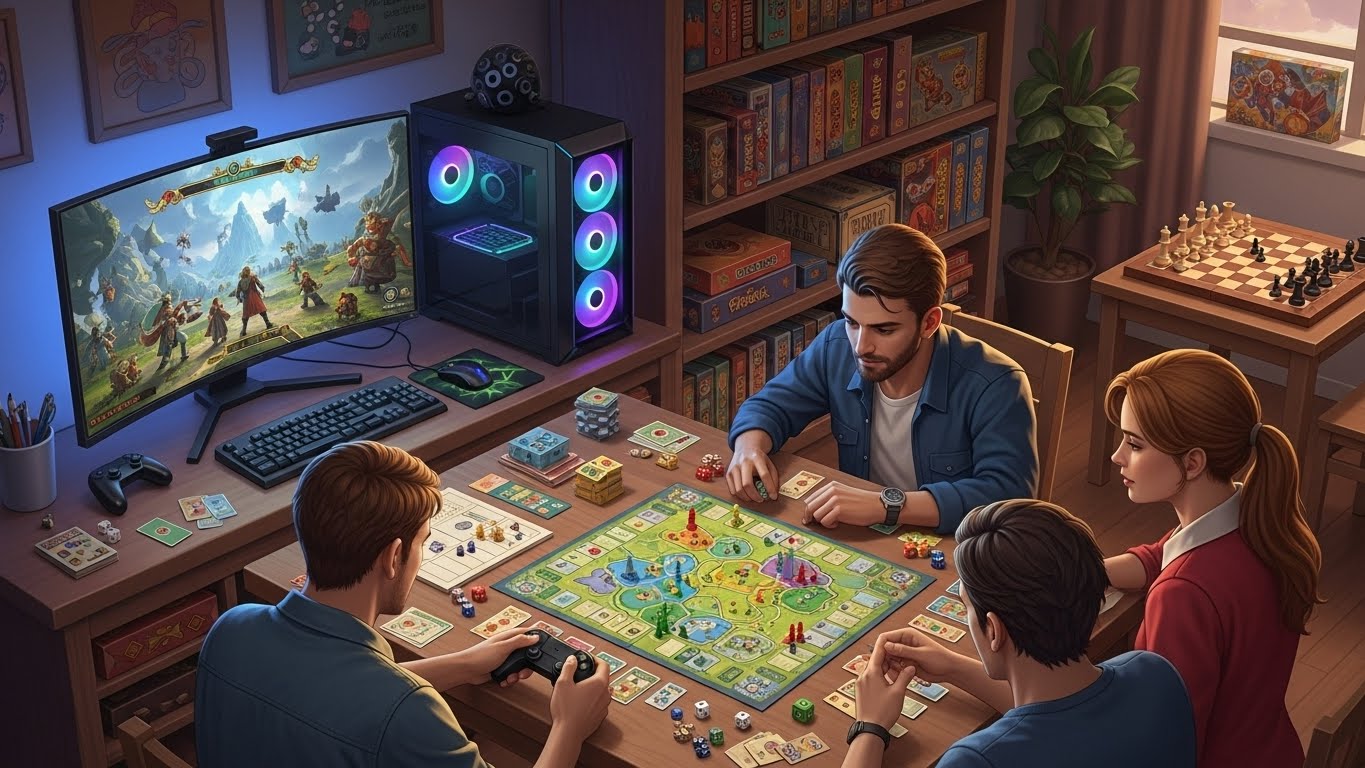

Introduction: Games as a Universal Language
Games have been a part of human civilization for thousands of years. From ancient board games to modern digital experiences, they serve as a universal form of entertainment, education, and social interaction. Games are more than just a way to pass the time—they reflect culture, encourage strategic thinking, and foster community. Today, the gaming world is a vast landscape encompassing video games, tabletop games, mobile apps, and interactive experiences that engage millions globally. Understanding the evolution of games and their cultural significance reveals why they remain an essential part of human life.
The Origins of Gaming: From Ancient Pastimes to Modern Entertainment
The history of games stretches back to prehistoric times. Archaeological findings suggest that board games, dice, and competitive activities existed thousands of years ago in civilizations like Mesopotamia, Egypt, and China. These early games were often tied to religious rituals, education, or strategy development. Games such as Senet, Go, and Chess not only entertained but also honed critical thinking and problem-solving skills. The foundational principles of competition, skill, and strategy established in these ancient games continue to influence modern game design.
Board Games: Strategy, Social Interaction, and Culture
Board games have been a staple of entertainment for centuries. Titles like Chess, Checkers, and Monopoly exemplify how simple rules can lead to complex strategy and social engagement. Board games often encourage face-to-face interaction, promoting communication, teamwork, and friendly competition. They also serve as a reflection of society, teaching values like fairness, critical thinking, and resource management. In recent years, modern board games have seen a resurgence, with designers creating innovative mechanics, immersive themes, and cooperative gameplay that appeal to both casual and hardcore players.
The Rise of Video Games: From Pixels to Realism
The introduction of video games in the 1970s and 1980s marked a revolutionary change in gaming. Early arcade games like Pong and Space Invaders introduced audiences to interactive entertainment, offering an experience entirely different from traditional games. Home consoles like the Nintendo Entertainment System and Sega Genesis brought gaming into households, creating iconic characters and franchises that remain popular today. Video games evolved rapidly, with advancements in graphics, sound design, and storytelling transforming them into immersive experiences capable of rivaling movies in narrative depth and visual appeal.
PC Gaming: A Playground for Creativity and Innovation
Personal computers introduced an era of versatility and creativity in gaming. PC games allowed developers to experiment with complex mechanics, large open worlds, and detailed graphics. Titles like The Sims, Warcraft, and Doom pushed boundaries, offering experiences ranging from life simulation to epic battles. PCs also fostered a culture of customization, modding, and community-driven content. Gamers could modify existing games or create entirely new experiences, extending the longevity of games and cultivating a collaborative culture that remains strong in today’s gaming industry.
Mobile Gaming: Entertainment at Your Fingertips
The rise of smartphones transformed gaming into an on-the-go experience. Mobile games such as Angry Birds, Candy Crush, and Pokémon Go made gaming accessible to a broader audience, including people who may never have owned a console or PC. Mobile gaming introduced innovative gameplay mechanics, utilizing touch controls, augmented reality, and location-based features. Its accessibility and convenience led to a massive expansion of the gaming audience, making games an everyday part of life for millions and introducing casual gaming as a dominant force in the industry.
Online Multiplayer Gaming: Connecting the World
The internet revolutionized gaming by enabling online multiplayer experiences. Games like World of Warcraft, Counter-Strike, and Fortnite allowed players to connect globally, fostering friendships, rivalries, and communities. Online gaming transformed games into social platforms where teamwork, strategy, and communication became crucial. eSports emerged as a professional arena for competitive gaming, with tournaments offering substantial rewards and drawing millions of viewers worldwide. Online games bridged distances and cultures, highlighting the universal appeal of gaming as both entertainment and social interaction.
The Art of Storytelling in Games
Modern games are not just about action or competition—they are a medium for storytelling. Narrative-driven games like The Last of Us, Red Dead Redemption, and Cyberpunk 2077 demonstrate how interactive experiences can convey complex emotions and moral dilemmas. Games allow players to influence outcomes, creating a personal connection to the story that traditional media cannot match. This interactive storytelling blurs the line between player and creator, offering a unique form of engagement where decisions matter, emotions are evoked, and experiences are deeply immersive.
The Role of Technology in Modern Gaming
Technological advancements have continually reshaped gaming. High-definition graphics, realistic physics engines, and advanced sound design enhance immersion. Virtual reality and augmented reality bring players into three-dimensional spaces, allowing unprecedented interaction with digital worlds. Artificial intelligence improves non-player character behavior, creating dynamic and unpredictable gameplay. Cloud gaming allows instant access to high-quality games without the need for expensive hardware. Technology not only enhances entertainment but also expands creative possibilities for game developers, shaping the future of interactive experiences.
The Psychological and Social Impact of Games
Games offer more than entertainment—they can positively affect cognition, social skills, and emotional wellbeing. Strategic games enhance problem-solving, critical thinking, and decision-making. Multiplayer games encourage collaboration, leadership, and communication. Many games also serve as safe spaces for social interaction, particularly for individuals who may feel isolated. While excessive gaming can pose risks such as addiction or social withdrawal, responsible engagement can foster learning, personal growth, and meaningful connections. Understanding these effects is essential for balancing the benefits and challenges of gaming.
Games as a Cultural Force
Games reflect and influence culture. They capture societal trends, explore moral questions, and represent diverse perspectives. Franchises like Pokémon, Mario, and Final Fantasy have shaped global culture, inspiring merchandise, art, music, and even language. Games also bring communities together through conventions, fan art, and online forums, creating shared experiences that extend beyond the screen. They have become an important cultural medium, comparable to literature, film, and music in their ability to shape ideas, values, and collective imagination.
The Future of Gaming
The future of gaming is full of exciting possibilities. Virtual reality and augmented reality will continue to expand immersive experiences, while artificial intelligence will create smarter, more responsive worlds. Cross-platform play will break down barriers between devices, enabling seamless interaction. Games will likely become even more personalized, using data to tailor experiences to individual players. Additionally, new genres and forms of interaction will emerge, blending entertainment, education, and social connection in ways we are only beginning to imagine. Gaming is set to remain a dynamic, influential force in society for years to come.
Conclusion: Beyond Entertainment
Games are much more than a pastime—they are a cultural, social, and technological phenomenon. From ancient board games to modern digital worlds, they entertain, challenge, and connect people across generations and geographies. The evolution of games highlights human creativity, adaptability, and our desire for meaningful experiences. As gaming continues to innovate, it will not only provide entertainment but also inspire new ways of thinking, learning, and connecting with others. Games are a testament to the enduring power of play, proving that through imagination and interaction, we can create worlds that entertain, enlighten, and unite.