Introduction to the Universe of Games
Games have been a part of human civilization since the dawn of time. From ancient board games played by our ancestors to the complex digital experiences of today, games have always reflected the creativity, intelligence, and imagination of humankind. They are not just a source of entertainment; they represent culture, competition, cooperation, and storytelling. Whether we are talking about chess or video games, sports or puzzles, the essence of gaming lies in the thrill of challenge and the joy of achievement.
The Ancient Roots of Gaming
Long before technology shaped the modern gaming industry, humans found ways to entertain themselves and each other through play. Ancient Egyptians played Senet, one of the oldest known board games. The Chinese invented Go, a game of strategy that remains relevant even thousands of years later. In India, games like Pachisi, which inspired the modern game Ludo, were played by kings and commoners alike. These early games were more than pastimes; they represented social structures, spiritual beliefs, and even political ideas. The strategic thinking used in games like chess was often mirrored in military planning. Thus, the idea of “playing” was not separate from learning or preparing for real-world challenges.
The Evolution of Physical Games
As civilizations grew, so did the complexity of their games. In medieval Europe, jousting, archery, and card games became popular among nobles, while simpler outdoor games were enjoyed by villagers. Sports emerged as organized forms of play, combining physical prowess with teamwork. Games like football, cricket, and tennis evolved from local pastimes into global spectacles that unite billions of people across the world. The idea of structured competition—complete with rules, referees, and championships—was born out of humanity’s desire to test skill and endurance in a fair, exciting way.
The Birth of Modern Board and Card Games
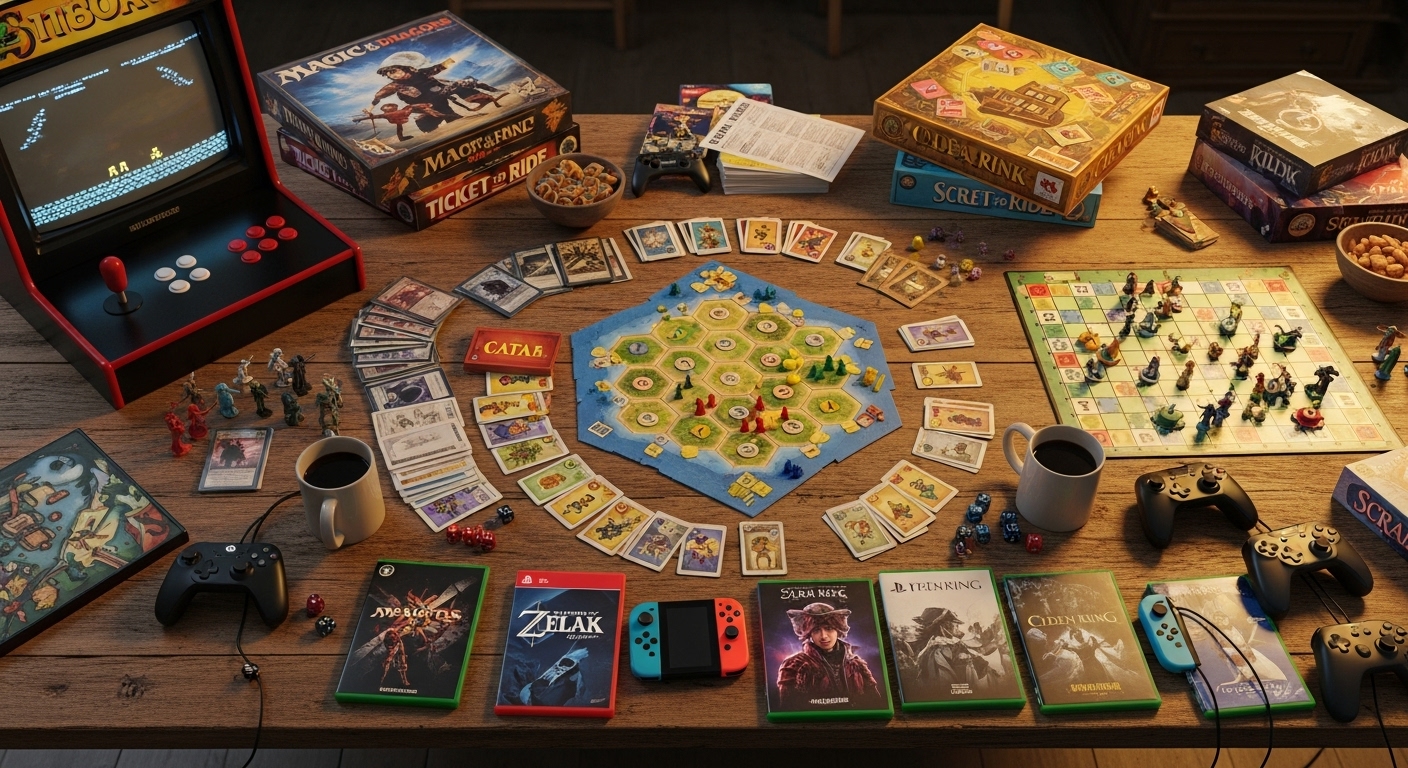
The industrial era brought not only technological progress but also mass production of games. Board games like Monopoly, Scrabble, and Risk emerged during the early 20th century, offering families a new form of entertainment at home. These games encouraged social interaction, strategic thinking, and creativity. Card games, both traditional like Poker and modern like Uno, became household staples. The beauty of these games lies in their simplicity: a few cards or a small board could create endless variations of play. They showed that fun does not always require screens or high-tech devices—it can come from the shared experience of friends gathered around a table.
The Digital Revolution: When Games Went Electronic
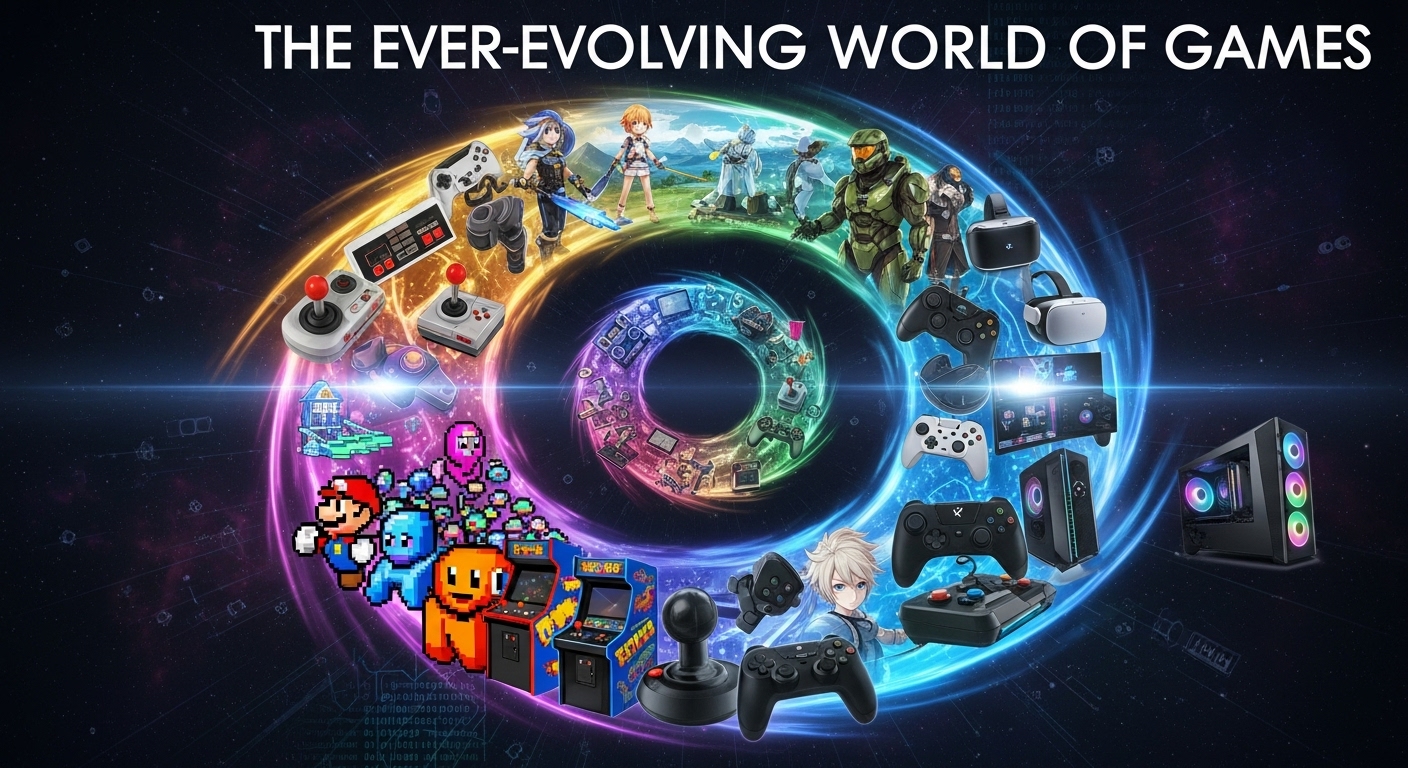
The 1970s marked a turning point with the birth of video games. What started as simple electronic experiments soon exploded into a cultural phenomenon. Games like Pong and Space Invaders captured the imagination of a generation and set the stage for an industry that would rival film and music in scale. The 1980s and 1990s brought legendary titles such as Super Mario Bros, The Legend of Zelda, and Sonic the Hedgehog, each pushing the boundaries of technology and creativity. The arcade became a social hub where young people gathered to compete and socialize, while home consoles brought gaming into the living room.
The Rise of Home Consoles and PCs
Companies like Nintendo, Sega, Sony, and Microsoft transformed gaming into a mainstream form of entertainment. Each new generation of consoles brought improved graphics, better storytelling, and deeper gameplay. Personal computers also became a major platform, enabling more complex and diverse experiences. Genres like strategy, simulation, and role-playing flourished on PCs. Games such as Civilization, Warcraft, and The Sims proved that gaming could be both intellectual and emotional. Meanwhile, console hits like Final Fantasy, Metal Gear Solid, and Halo showed that games could tell stories as compelling as any movie or novel.
The Golden Age of Online Gaming
The arrival of the internet changed everything. Multiplayer games became global experiences where people from different continents could play together in real time. Titles like Counter-Strike, World of Warcraft, and Runescape defined a new era where cooperation and competition extended beyond physical borders. Online communities formed around games, creating lasting friendships and even careers. The rise of broadband and digital distribution platforms made it easier than ever to connect, download, and share gaming experiences. This period marked the transition from gaming as a solitary activity to a deeply social one.
The Expansion of Mobile Gaming
With the rise of smartphones, gaming became accessible to almost everyone. Mobile games like Angry Birds, Candy Crush, and Clash of Clans showed that simple, addictive gameplay could captivate millions. Unlike traditional gaming, mobile games reached audiences who had never considered themselves “gamers.” Commuters, children, and even grandparents began to play casually on their phones. The convenience of having games in your pocket revolutionized the market, making gaming one of the most widespread forms of entertainment in history.
The Diversity of Game Genres
Games today cover an astonishing variety of genres and styles. Action games test reflexes and coordination; strategy games demand planning and foresight; role-playing games (RPGs) immerse players in vast, story-driven worlds. Sports games let players experience the thrill of their favorite teams, while puzzle games challenge the mind. Horror games, adventure titles, and life simulations cater to every taste imaginable. Each genre has its own loyal fan base, united by a shared appreciation for creativity and challenge.
The Art and Storytelling of Games
Modern games are not just about gameplay mechanics—they are a form of art. From visually stunning environments to emotionally complex narratives, games have evolved into powerful storytelling mediums. Titles like The Last of Us, Red Dead Redemption 2, and Journey show that games can evoke deep emotional responses. The combination of visual art, music, dialogue, and interactivity allows players to experience stories in ways that books and films cannot. In games, the player becomes part of the story, shaping its outcome through their choices and actions.
The Role of Music and Sound Design
Sound plays a crucial role in enhancing immersion and emotion in games. Iconic soundtracks such as those in The Legend of Zelda or Skyrim are instantly recognizable and evoke nostalgia. Sound effects and ambient audio create tension, excitement, or calm depending on the situation. Modern games employ professional composers and sound designers to craft audio experiences that rival Hollywood productions. The right sound at the right moment can transform an ordinary scene into something unforgettable.
Competitive Gaming and Esports
What was once casual competition among friends has grown into a billion-dollar global industry. Esports, or electronic sports, turn gaming into professional competition, complete with sponsorships, teams, and tournaments watched by millions. Games like League of Legends, Dota 2, and Fortnite have massive competitive scenes, where skilled players earn fame and fortune. Esports athletes train rigorously, studying strategies and honing reflexes just like traditional sports professionals. The rise of streaming platforms and live events has made esports a cultural phenomenon, proving that gaming can be both art and sport.
The Social Impact of Gaming
Games are more than entertainment—they shape culture and society. Online communities have created new forms of friendship and cooperation. Virtual worlds like Minecraft allow players to build, create, and share their imaginations freely. Games are used in education to teach history, science, and problem-solving skills. They are even employed in therapy to help people manage stress, anxiety, and cognitive challenges. The social impact of games is profound, breaking barriers between people and encouraging empathy and collaboration.
The Rise of Independent Games
While large studios dominate the market, independent developers have brought fresh perspectives and creativity. Indie games like Hollow Knight, Celeste, and Stardew Valley show that passion and innovation can rival big budgets. These creators often focus on unique storytelling, artistic design, and emotional depth. Indie games have given voice to diverse creators around the world, enriching the gaming landscape with originality and heart.
The Role of Technology in Shaping the Future of Games
Advancements in technology continue to redefine what is possible in gaming. Virtual Reality (VR) and Augmented Reality (AR) immerse players in entirely new dimensions of experience. Artificial Intelligence allows games to adapt to players’ behavior, creating smarter opponents and more realistic worlds. Cloud gaming services eliminate the need for expensive hardware, letting people play high-end games on any device. As technology progresses, the line between the real and virtual worlds continues to blur, expanding the horizons of imagination.
The Psychology of Gaming
Why do people love games so much? Psychologically, gaming satisfies core human needs: achievement, connection, and exploration. The sense of progress, the reward for skill, and the opportunity to escape reality all contribute to gaming’s appeal. Studies show that moderate gaming can improve cognitive skills, decision-making, and creativity. Multiplayer games fulfill social needs, offering companionship and teamwork. Like any form of entertainment, balance is key—too much gaming can become unhealthy, but in the right amounts, it provides joy and growth.
The Economic Power of the Gaming Industry
The gaming industry is one of the largest entertainment sectors in the world, surpassing film and music combined. Developers, artists, designers, voice actors, and writers all contribute to a massive global ecosystem. Games drive innovation in software, hardware, and digital distribution. The industry also supports countless content creators who stream, review, and analyze games for millions of viewers. The economic influence of gaming extends beyond entertainment, shaping careers, education, and even national economies.
Representation and Diversity in Games
In recent years, the gaming world has made strides toward inclusivity and representation. Characters now reflect a broader range of cultures, genders, and experiences. Developers recognize that players come from all walks of life, and diversity enriches storytelling. Games like Horizon Zero Dawn and Life is Strange highlight strong, complex female protagonists, while others explore themes of identity, belonging, and social justice. This growing inclusivity not only broadens the audience but also deepens the artistic value of gaming.
The Community and Culture Around Games
Gaming culture has grown into a vibrant ecosystem of art, memes, fan fiction, cosplay, and conventions. Events like gaming expos and fan festivals celebrate creativity and connection. Online communities form around shared passions, where players discuss strategies, share experiences, and express their love for their favorite titles. This sense of belonging transforms gaming from a solitary activity into a cultural movement that bridges generations and geographies.
The Educational and Therapeutic Power of Games
Games are now used for learning and healing. Educational games make complex topics like math or science engaging for students. Simulations help doctors, pilots, and engineers train safely and effectively. Therapeutic games assist in rehabilitation and mental health treatments, promoting relaxation and positive thinking. This demonstrates the versatility of gaming—it can entertain, educate, and heal simultaneously.
The Future of Games
The future of gaming is full of possibilities. With advances in artificial intelligence, cloud technology, and virtual reality, the experiences of tomorrow will be more immersive than ever. Games will continue to evolve as both art and technology, blending interactivity with storytelling in ways that defy imagination. We might soon see worlds where every character is intelligent, every choice matters, and every story is unique to the player. The future promises deeper connections between people, richer creativity, and endless new frontiers for exploration.
Conclusion: The Infinite Game
Games are more than pastimes—they are reflections of who we are. They tell our stories, challenge our minds, and connect our hearts. From ancient stones to digital galaxies, from playgrounds to esports arenas, gaming has always been a fundamental part of the human experience. It continues to evolve, inspiring generations to imagine, create, and play. The world of games is an infinite one, where every player becomes part of a story that never truly ends.