Introduction: The Transformation of Gaming
Video games have come a long way since their humble beginnings in the 1970s. What started as simple, pixelated experiences on arcade machines has now blossomed into a multi-billion-dollar industry, with games that feature complex storylines, hyper-realistic graphics, and vast open worlds. Gaming today is not just about entertainment—it’s a culture, a community, and even a career for some. But how did we get here? The journey from basic games like Pong and Space Invaders to the immersive virtual realities of today is one filled with technological advancements, creative leaps, and changing social dynamics. This blog will explore how gaming has evolved and what the future holds for the industry.
The Golden Age of Arcade Games
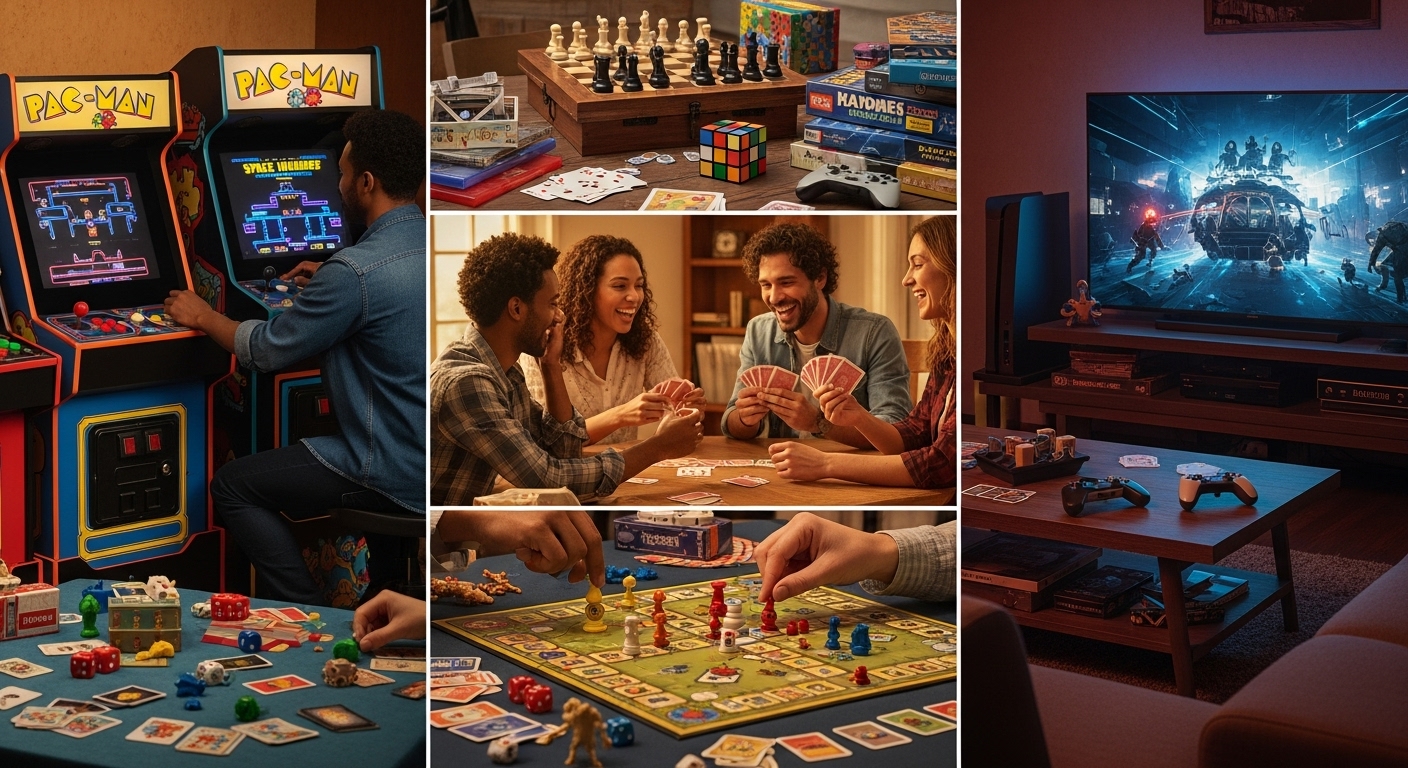
The 1970s and 1980s are often referred to as the “Golden Age” of arcade games. This was the era when gaming first found its place in popular culture. Games like Pong, Pac-Man, and Space Invaders took arcades by storm, introducing millions to the concept of interactive entertainment. These early games were simple by today’s standards, featuring 2D graphics, minimal controls, and straightforward gameplay. Yet, they captured the imaginations of players and set the stage for the booming video game industry.
The arcade was the social hub for gaming enthusiasts, and the experience of playing these games in a crowded, neon-lit room created a sense of camaraderie among strangers. While the technology behind these games was limited, their impact was enormous, making video games an integral part of youth culture for decades to come.
The Rise of Home Consoles: Gaming at Your Fingertips
As technology advanced, so did the capabilities of video games. The 1980s and 1990s saw the rise of home gaming consoles, allowing players to enjoy games from the comfort of their living rooms. The release of consoles like the Nintendo Entertainment System (NES) and Sega Genesis brought iconic franchises such as Super Mario, The Legend of Zelda, and Sonic the Hedgehog into homes worldwide.
Home consoles made gaming more accessible to a wider audience. The graphics were still relatively simple, but the games were rich with creativity and had more depth than their arcade counterparts. The 16-bit and 32-bit systems ushered in a new era of game design, with side-scrolling platformers, fighting games, and first-person shooters becoming some of the most popular genres.
For the first time, players could form long-term relationships with the characters and worlds within these games. The longevity of certain franchises like Final Fantasy, Super Mario, and The Legend of Zelda helped solidify gaming as more than just a passing trend—it was quickly becoming a beloved form of entertainment.
3D Graphics and the Evolution of Gameplay
The late 1990s and early 2000s marked a pivotal moment in the evolution of gaming: the transition from 2D to 3D graphics. Consoles like the Sony PlayStation and Nintendo 64 brought an entirely new dimension to gaming, allowing for more immersive worlds and realistic characters. Games like Super Mario 64, The Legend of Zelda: Ocarina of Time, and Gran Turismo introduced players to vast 3D environments that could be explored freely, offering a sense of depth and realism that was previously impossible.
This era also saw the rise of complex, multi-layered narratives that rivaled those in film and literature. Titles like Metal Gear Solid and Final Fantasy VII took players on emotional, story-driven journeys that pushed the boundaries of what video games could achieve in terms of storytelling.
Additionally, online multiplayer gaming began to gain traction with the launch of the Sony PlayStation 2 and the Xbox. Games like Halo 2 and Final Fantasy XI allowed players to connect with others around the world, giving birth to the massive online communities that are now integral to the gaming experience.
The Rise of Mobile Gaming: Gaming Everywhere
As smartphones became ubiquitous in the 2010s, mobile gaming emerged as a major force in the industry. With the advent of the Apple App Store and Google Play, games like Angry Birds, Candy Crush, and Clash of Clans became household names, bringing gaming to millions of people who may have never considered themselves “gamers.”
Mobile gaming brought a new level of convenience, allowing players to enjoy their favorite games anytime, anywhere. These games were often simple yet addictive, designed to be played in short bursts during commutes or while waiting in line. The accessibility of mobile gaming also opened the door for indie developers, who could now publish their games directly to platforms with minimal cost, leading to a surge in creativity and innovation in the gaming space.
Though mobile gaming is often criticized for its microtransactions and simplistic gameplay, it has undeniably contributed to the industry’s growth and broadened the definition of what gaming can be.
Virtual Reality and Augmented Reality: The Next Frontier
As the gaming world continues to innovate, virtual reality (VR) and augmented reality (AR) represent the next frontier in interactive entertainment. VR headsets like the Oculus Rift and HTC Vive provide players with fully immersive gaming experiences, allowing them to step into 3D environments and interact with the game world in a way that was previously unimaginable.
Games like Beat Saber, Half-Life: Alyx, and Superhot VR demonstrate the incredible potential of VR, offering experiences that are not just visually stunning but physically engaging. With VR, players can physically move within the game world, whether it’s by dodging obstacles, slashing at enemies, or even building virtual worlds from scratch.
AR, on the other hand, overlays digital elements onto the real world. Pokémon Go, the most well-known example of AR gaming, showed how blending the digital with the physical can create unique, location-based experiences. While VR offers a more immersive experience, AR allows players to interact with the real world while still engaging with game mechanics.
The Future of Gaming: Immersive, Social, and Global
The future of gaming is exciting, as new technologies, social platforms, and creative ideas continue to shape the industry. Cloud gaming, powered by platforms like Google Stadia and Xbox Game Pass, promises to make high-quality gaming accessible to anyone with an internet connection, removing the need for expensive consoles or gaming PCs.
The integration of artificial intelligence (AI) is also paving the way for smarter, more responsive gaming experiences. From dynamic storylines that change based on player choices to AI-driven opponents that adapt to your strategies, the next generation of games will be more personalized and immersive than ever before.
Moreover, as gaming becomes more social, the lines between gaming and socializing continue to blur. Multiplayer games like Fortnite and Minecraft have already established themselves as platforms where players not only game but also socialize, create, and share experiences in real-time. The metaverse, a concept that merges virtual worlds with social interaction, is another potential future direction for gaming.
Conclusion: Gaming as a Global Cultural Force
Video games have transformed from simple entertainment into a global cultural phenomenon. From the pixelated graphics of early arcade games to the hyper-realistic, interactive worlds of today, gaming has evolved into an art form, a social platform, and a multi-billion-dollar industry. Whether through immersive VR experiences, casual mobile games, or the rise of esports, the future of gaming looks limitless.
As technology continues to advance and new generations of gamers emerge, the ways in which we experience games will only grow more complex and diverse. One thing is certain: gaming will continue to evolve, and its influence on society will only become stronger.