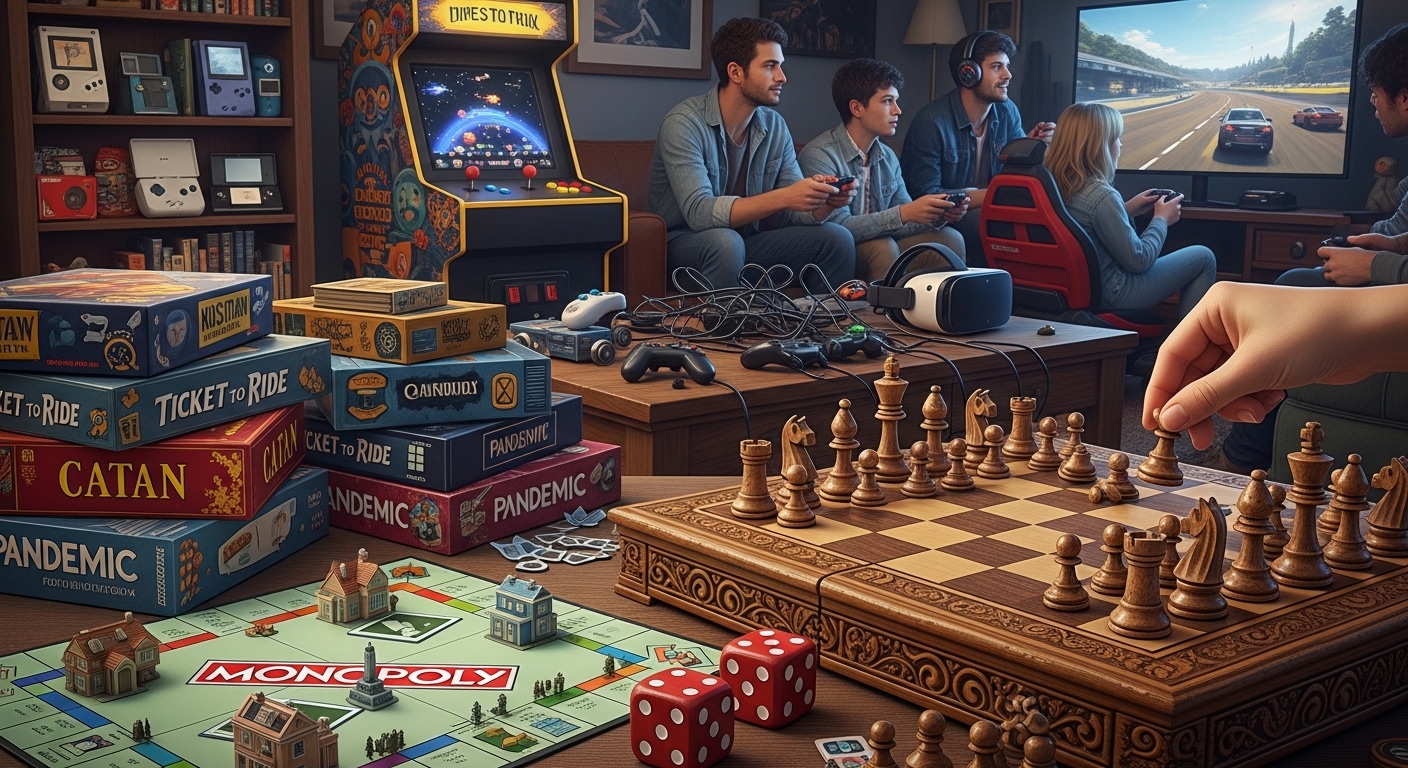

Introduction: The Enduring Appeal of Games
Games have been an integral part of human culture for thousands of years. From simple board games played around a campfire to complex digital universes inhabited by millions, games offer more than entertainment. They foster social interaction, stimulate creativity, and challenge the mind. This blog explores the multifaceted nature of games, their history, types, cultural impact, and why they continue to captivate players of all ages.
The Origins of Games: A Historical Perspective
Games have existed since ancient times, often reflecting the societies that created them. Early games such as Senet in ancient Egypt, Go in China, and Chess in India combined strategy and skill, serving both as pastimes and as tools for teaching critical thinking.
These early games laid the foundation for modern gaming by introducing concepts like turn-taking, competition, and cooperation. Over centuries, games evolved alongside technology and culture, adapting to the needs and interests of players.
Different Types of Games: From Physical to Digital
Traditional Board and Card Games
Classic games like Monopoly, Scrabble, Poker, and Chess have been staples in homes worldwide. These games encourage strategic thinking, negotiation, and social bonding. Their tactile nature and face-to-face interaction make them timeless.
Outdoor and Physical Games
Sports and playground games such as soccer, tag, and hopscotch promote physical activity, teamwork, and motor skills. These games often serve as communal experiences, strengthening friendships and communities.
Video Games
The rise of computers and consoles introduced a new realm of gaming. Video games combine storytelling, strategy, action, and creativity in immersive digital environments. With genres ranging from role-playing and shooters to puzzle and simulation games, digital games offer endless variety.
Mobile Games
The accessibility of smartphones has popularized mobile gaming, allowing people to play anytime, anywhere. Titles like puzzle games, casual games, and competitive multiplayer apps have expanded the gaming audience globally.
The Social Impact of Games
Games are inherently social activities. Whether around a table or across the internet, they bring people together. They encourage collaboration, communication, and competition in a controlled environment where players learn to win graciously and accept defeat.
Online multiplayer games and gaming communities have created new social spaces where friendships form regardless of geographical boundaries. These communities provide support, entertainment, and sometimes even a sense of belonging.
Educational and Cognitive Benefits of Games
Beyond fun, games offer substantial cognitive benefits. Strategic games like Chess or puzzle games enhance problem-solving skills, memory, and concentration. Role-playing games stimulate creativity and storytelling abilities.
Educational games are specifically designed to teach subjects ranging from mathematics to history in an engaging way. Gamification in learning environments boosts motivation and retention by turning study into play.
Games as a Form of Art and Storytelling
Games are increasingly recognized as a unique artistic medium. They combine visual design, music, narrative, and interactive mechanics to create experiences that engage players emotionally and intellectually.
Narrative-driven games allow players to influence the story’s outcome, making each experience personal and memorable. The artistry involved in character design, world-building, and soundtrack composition highlights games’ capacity for creative expression.
The Evolution of Competitive Gaming
Competitive gaming, or esports, has grown into a global phenomenon. What began as informal contests among friends has become organized tournaments with millions of viewers, professional players, and significant prize pools.
Esports covers various games including strategy, first-person shooters, and fighting games. It offers players opportunities for careers in playing, coaching, broadcasting, and event management.
Challenges and Criticisms of Gaming
Despite many benefits, gaming faces challenges and criticisms. Concerns about addiction, excessive screen time, and social isolation are common. Some worry about violent content or the impact of microtransactions and gambling-like features in games.
Addressing these issues requires responsible game design, awareness, and balance. Encouraging healthy gaming habits and providing support for those struggling with gaming-related problems are important steps.
The Future of Games: Innovation and Inclusivity
The future of gaming looks bright and full of innovation. Advances in virtual reality and augmented reality promise even more immersive experiences. Artificial intelligence is making games smarter and more adaptive to players’ styles.
Inclusivity is also becoming a priority, with developers focusing on accessibility features that allow players with disabilities to enjoy games fully. The industry is expanding to represent diverse cultures and stories, making games more reflective of the world’s rich tapestry.
Conclusion: Why Games Will Always Matter
Games are much more than mere pastimes. They are social connectors, educational tools, creative outlets, and competitive arenas. Their ability to evolve with technology and culture ensures they will remain relevant and beloved for generations to come.
Whether it’s a simple card game with family or a sprawling online adventure, games invite us all to play, learn, and grow. They remind us that in play, there is both joy and meaning.