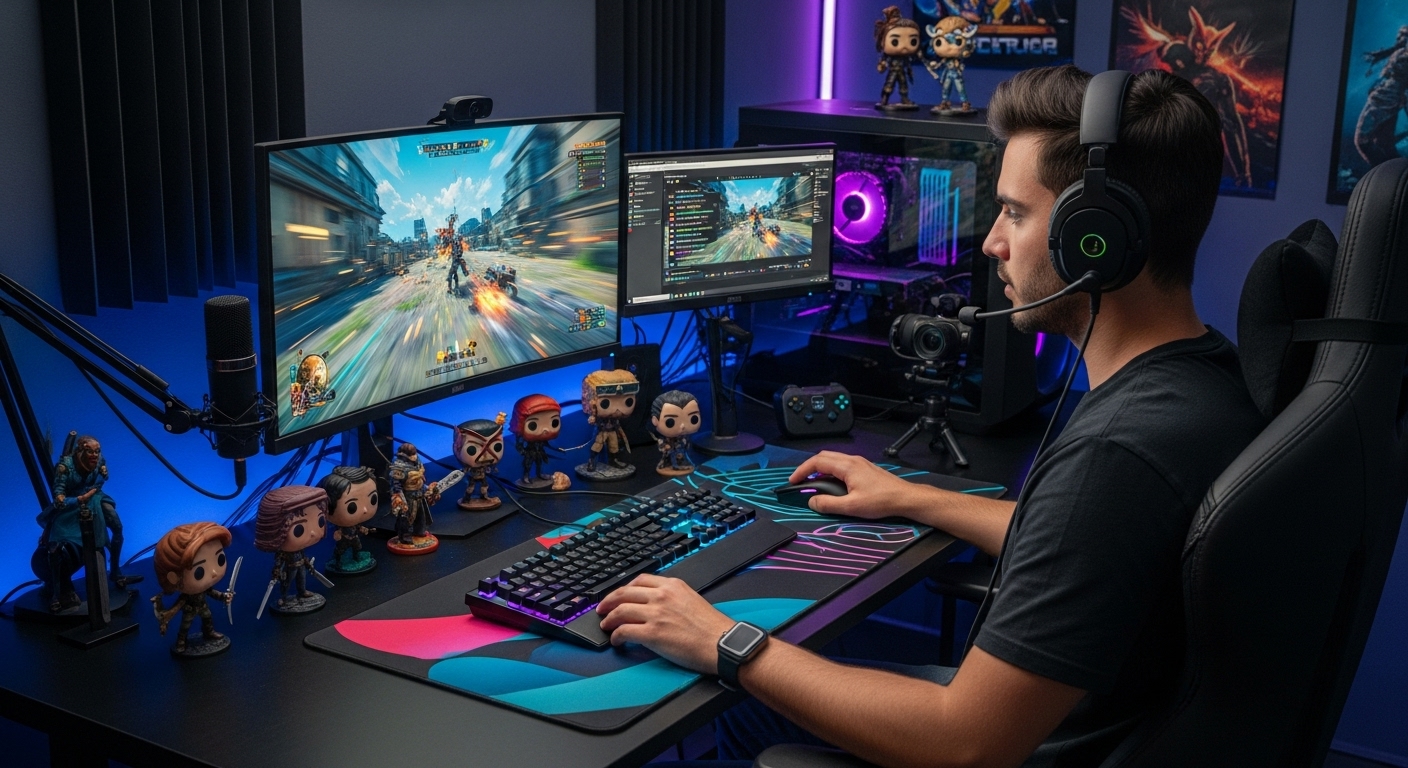
Gaming has become one of the most influential forms of entertainment in the modern world. What began as simple pixelated graphics and basic gameplay mechanics has grown into a multibillion-dollar industry that blends art, technology, storytelling, and community. Today, gaming is not just a pastime—it is a cultural movement, a form of creative expression, and a global phenomenon that unites players of all ages and backgrounds.
This blog explores the fascinating journey of gaming, its technological evolution, the psychological and social impacts it has on players, and its potential future as it continues to push the limits of imagination and innovation.
The Origins of Gaming
The story of gaming began in the mid-20th century, when scientists and engineers started experimenting with early computer technology. The first known video game, “Tennis for Two,” was created in 1958, followed by “Spacewar!” in 1962, which became a foundational inspiration for future developers.
However, the true birth of gaming as a commercial industry occurred in the 1970s with the arrival of arcade machines. Games like “Pong,” “Space Invaders,” and “Pac-Man” introduced the world to interactive entertainment. Players lined up at arcades, competing for high scores and bragging rights.
These early games were simple yet addictive, defined by pixelated graphics, electronic soundtracks, and fast-paced challenges. They laid the foundation for what would become an ever-expanding digital universe.
The Rise of Home Consoles
The 1980s marked a new era—the age of home gaming consoles. With systems like the Atari 2600, Nintendo Entertainment System (NES), and Sega Master System, gaming shifted from arcades to living rooms. This transition made gaming accessible to families and children across the world.
Nintendo became a dominant force in this era, introducing legendary characters such as Mario, Link, and Donkey Kong. These mascots not only became pop culture icons but also helped define the genres of platformers, adventure games, and role-playing games.
The Sega versus Nintendo rivalry also fueled innovation and competition. Each company sought to outdo the other with better graphics, smoother gameplay, and new franchises.
The late 1980s and early 1990s also saw the rise of handheld gaming. The Game Boy revolutionized portable entertainment, proving that gaming could be enjoyed anywhere. Titles like “Tetris” and “Pokémon” captivated millions, marking the beginning of a mobile gaming legacy that continues to evolve today.
The Shift to 3D and the Birth of Modern Gaming
The 1990s brought another major leap forward—the transition from 2D to 3D graphics. With the launch of systems like the PlayStation, Nintendo 64, and Sega Dreamcast, gaming entered the world of immersive environments and cinematic storytelling.
Games such as “Super Mario 64,” “Final Fantasy VII,” “The Legend of Zelda: Ocarina of Time,” and “Metal Gear Solid” showcased the artistic and narrative potential of the medium. These titles combined detailed graphics, emotional music, and complex characters, elevating gaming from simple fun to meaningful storytelling.
This period also marked the rise of competitive multiplayer games. Local split-screen battles and cooperative missions became social experiences, bringing friends and families together in living rooms across the world.
At the same time, PC gaming began to thrive. Titles like “Doom,” “StarCraft,” and “Half-Life” showed that computers could deliver sophisticated gameplay and customization options beyond what consoles offered. Online multiplayer began to emerge, paving the way for the global connectivity that defines modern gaming.
The Online Revolution
The early 2000s introduced one of the most transformative changes in gaming—the rise of the internet. Online connectivity allowed players to compete and collaborate across continents, breaking down physical barriers.
Massively Multiplayer Online Role-Playing Games (MMORPGs) such as “World of Warcraft” created vast digital worlds where millions of players could interact simultaneously. These games were more than entertainment; they became social ecosystems, where friendships and communities flourished.
First-person shooters like “Call of Duty” and “Halo” defined the online competitive gaming scene, establishing the foundation for esports. Voice chat, clans, and ranking systems became integral to the online experience, transforming solitary gaming into a deeply social activity.
The growth of digital distribution platforms also changed how players accessed games. Services that allowed users to download titles directly to their devices eliminated the need for physical discs and opened the door for indie developers to reach audiences worldwide.
The Rise of Esports
Esports, or competitive gaming, emerged as a legitimate sport during the 2010s. Professional players, teams, and tournaments became global attractions, with prize pools rivaling those of traditional sports.
Games like “League of Legends,” “Dota 2,” “Counter-Strike,” and “Overwatch” became household names among fans. Esports athletes trained for hours daily, mastering mechanics, teamwork, and strategy.
Major tournaments began to fill stadiums, with millions more watching live online. The spectacle of esports redefined what it meant to be an athlete, and gaming became recognized as a form of professional competition.
Streaming platforms also played a huge role in this growth. Gamers could now broadcast their gameplay to audiences worldwide, creating new forms of entertainment and income. Streamers and content creators built loyal communities, blurring the lines between celebrity culture and gaming.
The Expansion of Mobile Gaming
While consoles and PCs dominated the industry for decades, mobile gaming has become the most accessible and widespread form of gaming in the modern era. Smartphones allow anyone to enjoy games instantly, whether for five minutes or five hours.
Casual titles like “Candy Crush,” “Clash of Clans,” and “Among Us” introduced gaming to audiences who had never touched a console before. Meanwhile, more complex mobile experiences like “Genshin Impact” and “PUBG Mobile” demonstrated that phones could deliver console-quality experiences.
Mobile gaming’s success lies in its accessibility, affordability, and social integration. Multiplayer connectivity, frequent updates, and social features keep players engaged, while in-app purchases have created a new business model that continues to evolve.
Gaming as an Art Form
Modern gaming is no longer just about competition or entertainment—it is about storytelling, emotional connection, and artistic expression. Developers have used the medium to explore complex human experiences, emotions, and moral questions.
Games like “The Last of Us,” “Journey,” “Red Dead Redemption 2,” and “Life is Strange” showcase deep storytelling, character development, and cinematic design. These experiences rival the emotional depth of films and literature, using interactivity to immerse players in unique ways.
Indie developers have also contributed to this artistic renaissance. Independent titles such as “Celeste,” “Undertale,” and “Hollow Knight” prove that creativity and storytelling can triumph even without massive budgets.
Soundtracks, visual design, and gameplay mechanics all combine to create immersive works of art. Many gamers consider certain titles not just games but emotional journeys that leave lasting impressions.
The Psychology of Gaming
Gaming has significant psychological effects—both positive and negative. Studies have shown that video games can improve cognitive skills such as problem-solving, multitasking, and hand-eye coordination.
Role-playing games encourage empathy by allowing players to step into the shoes of different characters, experiencing diverse perspectives and moral dilemmas. Cooperative games strengthen teamwork and communication, while strategy games enhance planning and decision-making.
However, gaming also presents challenges. Excessive playtime can lead to addiction, social isolation, or neglect of responsibilities. Developers and players alike are becoming more aware of the importance of balance and mental health in gaming.
Modern design philosophies are shifting toward mindful gaming—creating experiences that reward skill, creativity, and social interaction rather than addiction or exploitation.
The Role of Technology in Modern Gaming
Technology has always been the engine behind gaming’s evolution. The shift from 8-bit graphics to photorealistic visuals, from single-player cartridges to cloud gaming, reflects how innovation continues to expand what’s possible.
Graphics and Processing Power: Modern consoles and PCs feature powerful processors and GPUs capable of rendering lifelike graphics and complex physics. Games today feature realistic lighting, detailed textures, and immersive sound design that blur the line between digital and real.
Virtual Reality (VR) and Augmented Reality (AR): VR allows players to step directly into game worlds, creating a fully immersive experience. AR overlays digital elements onto the real world, blending fantasy and reality. These technologies have revolutionized genres from horror to fitness.
Artificial Intelligence: AI plays a vital role in modern gaming, from creating smarter enemies to personalizing player experiences. Procedural generation allows developers to create infinite worlds, while AI-driven storytelling adapts to each player’s decisions.
Cloud Gaming: The next frontier of gaming lies in the cloud. Services now allow players to stream games instantly without the need for expensive hardware, making high-quality gaming more accessible to everyone.
The Social Side of Gaming
Gaming is no longer a solitary activity—it’s a global social network. Online communities, multiplayer modes, and voice chat have created spaces for collaboration, friendship, and competition.
Many gamers find belonging in online groups, guilds, and fandoms. Shared interests and teamwork foster relationships that often extend beyond the screen. Events, conventions, and live tournaments bring digital communities into the real world.
Gaming has also become a tool for education and activism. Some developers use their platforms to raise awareness about environmental issues, social justice, or history through interactive storytelling.
The Economics of Gaming
The gaming industry has surpassed music and film in revenue, becoming one of the largest entertainment markets in the world. With billions of players and constant innovation, it continues to grow rapidly.
Revenue streams include game sales, downloadable content, microtransactions, and subscription models. Esports, streaming, and influencer marketing have created entirely new economic ecosystems within gaming.
Game development has also become a diverse global industry. Independent creators, small studios, and major publishers all contribute to a vibrant market that values creativity and innovation.
The Future of Gaming
The future of gaming holds endless possibilities. As technology evolves, so will the ways we play, create, and connect. Artificial intelligence, virtual reality, and metaverse concepts will push gaming beyond screens and into fully interactive digital worlds.
In the coming years, players may experience games that adapt to their emotions, decisions, and even biometrics. Cross-platform integration will ensure seamless play between devices, while community-driven content will continue to shape gaming culture.
Gaming’s role in education, fitness, and therapy will also grow. Interactive simulations can train professionals, teach students, and promote well-being. The boundaries between work, play, and learning will blur even further.
The future gamer may not just be a player but a co-creator—shaping worlds, narratives, and communities within an ever-expanding digital landscape.
Conclusion
Gaming has come a long way from its humble beginnings as a simple electronic diversion. It has evolved into an art form, a profession, a social platform, and a global cultural force. It bridges generations, unites people from diverse backgrounds, and inspires creativity on an unprecedented scale.
From arcades and consoles to mobile apps and virtual worlds, gaming continues to reinvent itself with every technological leap. Its power lies in its ability to tell stories, spark emotions, and build connections across the globe.
As we look to the future, gaming will remain one of the most dynamic and transformative aspects of human culture—driven by imagination, innovation, and the endless curiosity of players.
The next era of gaming is not just about better graphics or faster systems; it’s about deeper experiences, more inclusive communities, and limitless creativity. Gaming has proven that it is not merely entertainment—it is an integral part of modern life, shaping the way we think, connect, and dream.