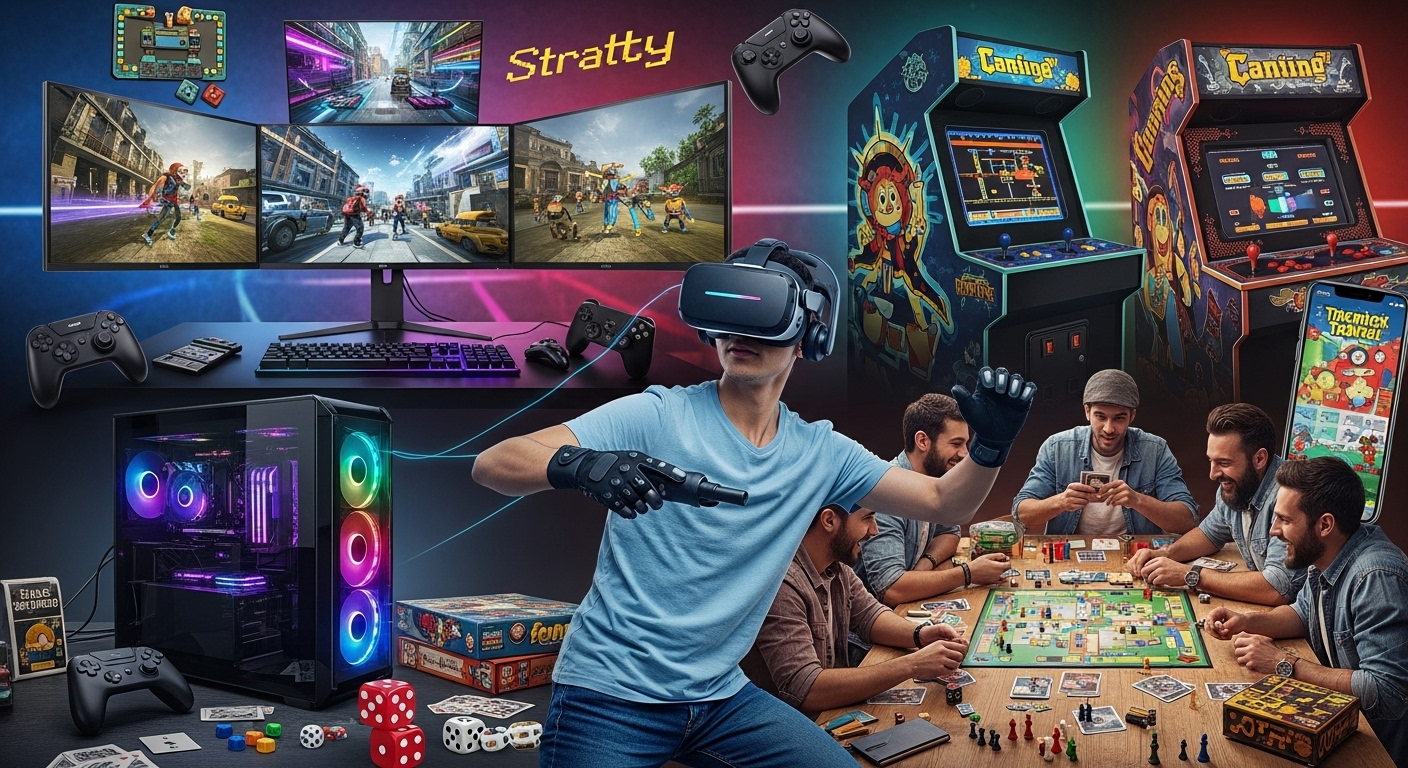
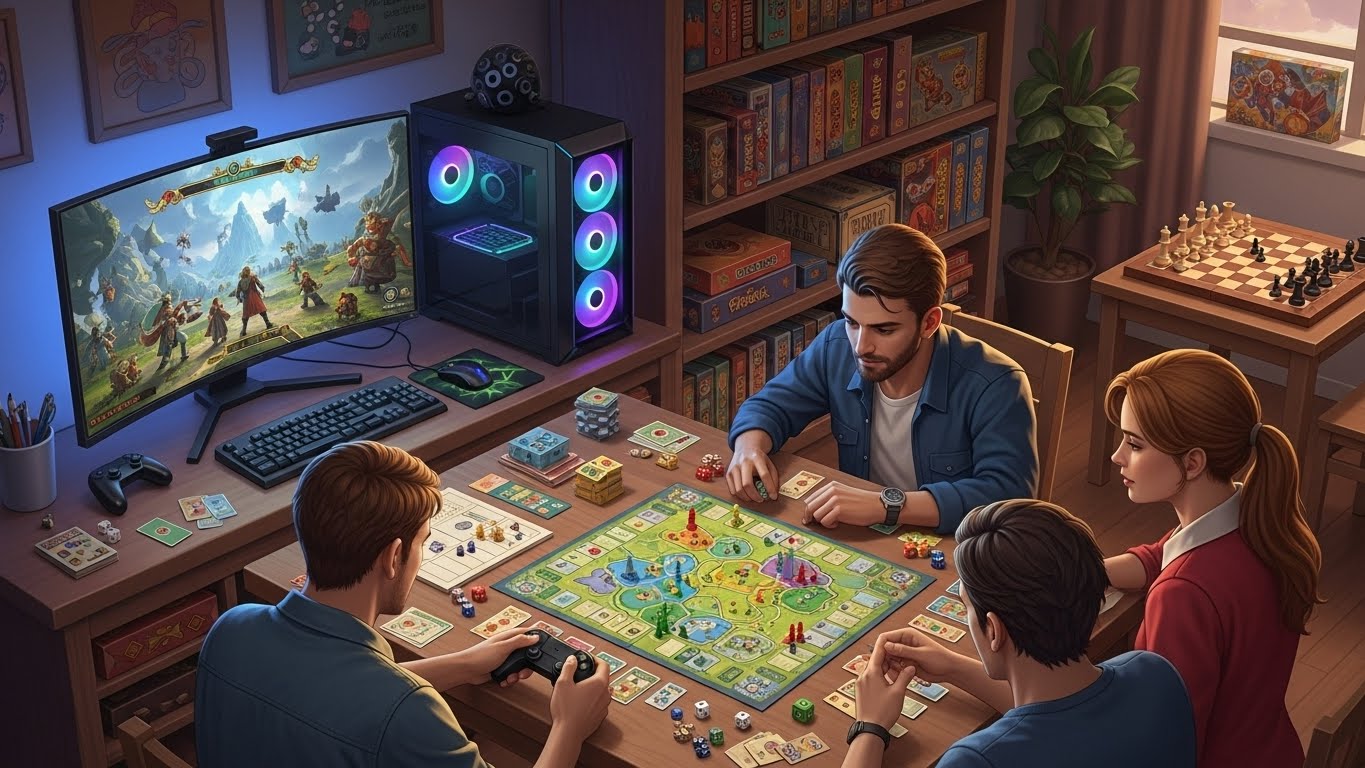
Gaming has come a long way since its humble beginnings in the early 1970s. What once started as simple pixelated graphics and rudimentary gameplay has evolved into immersive experiences that span across generations, bringing together players from all walks of life. The journey of gaming reflects not just technological advancements, but also cultural shifts, the rise of competitive play, and the emergence of new narratives that reshape how we think about entertainment. In this blog post, we’ll take a deep dive into the history, development, and future of gaming, examining how it became one of the most influential cultural phenomena of the 21st century.
The Birth of Gaming: From Pong to Arcade Machines
The gaming revolution began with the creation of simple, but addictive, games that were accessible to the general public. In 1972, Atari’s Pong, a two-player table tennis simulation, became the first commercially successful arcade game. It was the beginning of a new form of entertainment—one that would soon become a staple in both arcades and living rooms around the world. As the arcade industry grew, games like Space Invaders (1978), Asteroids (1979), and Pac-Man (1980) dominated the scene, each adding their own unique flavor to the rapidly expanding world of gaming.
This period of gaming was characterized by simple, pixelated graphics and straightforward gameplay mechanics. Players would drop a coin into an arcade machine and compete for high scores, with games designed to be easy to pick up but challenging to master. The arcade culture that developed during this time laid the foundation for competitive gaming and social gaming experiences, as it was common for groups of friends to meet at arcades and play together.
The Rise of Home Consoles and the Golden Age of Gaming
While arcades were still thriving, the 1980s saw the rise of home consoles, bringing gaming into the living rooms of millions of people. The Nintendo Entertainment System (NES), released in 1985, revolutionized the gaming industry by offering a vast library of games with improved graphics, sound, and gameplay. Titles like Super Mario Bros., The Legend of Zelda, and Metroid became household names, and gaming started to evolve from a niche activity to a mainstream pastime.
The success of the NES was followed by other consoles such as the Sega Genesis and Super Nintendo Entertainment System (SNES), which competed for dominance in the home gaming market. These systems offered more sophisticated hardware, allowing developers to create more complex and visually impressive games. This period is often referred to as the Golden Age of Gaming, marked by the release of iconic franchises that are still beloved today, such as Super Mario, Final Fantasy, Street Fighter, and Sonic the Hedgehog.
As the gaming industry grew, so too did the development of multiplayer games, paving the way for more social and competitive experiences. Games like Street Fighter II and GoldenEye 007 made their mark by allowing players to engage in head-to-head combat, either in person or via split-screen multiplayer modes. The gaming community began to form, with gamers coming together to exchange tips, strategies, and experiences.
The Shift to 3D Graphics and the Rise of the PlayStation Era
The 1990s marked a pivotal point in the evolution of gaming, with the introduction of 3D graphics and the rise of the PlayStation. Sony’s first PlayStation console, released in 1994, changed the gaming landscape forever. This console introduced the world to the power of 3D graphics, enabling developers to create fully immersive worlds and more realistic characters. Games like Final Fantasy VII, Metal Gear Solid, and Gran Turismo showcased the potential of this new technology and set the stage for the future of gaming.
The PlayStation era also saw the development of new gameplay styles, such as open-world games, survival horror, and platformers. Super Mario 64, released for the Nintendo 64 in 1996, revolutionized 3D platforming, while Resident Evil and Silent Hill brought the survival horror genre into the mainstream. These games weren’t just about flashy graphics—they offered deep storytelling and compelling narratives that kept players invested for hours.
Alongside the PlayStation, the Sega Dreamcast and Nintendo 64 also contributed to the expansion of the gaming industry, each offering unique experiences that pushed the boundaries of what games could do. However, it was Sony’s PlayStation that solidified itself as the dominant console of the era, leading to the creation of iconic franchises that continue to define the gaming industry today.
The Rise of Online Gaming and the Advent of Multiplayer Experiences
The late 1990s and early 2000s saw a dramatic shift in how people played games. The internet allowed players to connect with each other from all around the world, giving rise to online multiplayer gaming. Games like Diablo II (2000) and Counter-Strike (1999) introduced the concept of online combat and cooperative play, while EverQuest (1999) and World of Warcraft (2004) brought the world of massively multiplayer online role-playing games (MMORPGs) into the mainstream.
This period marked the beginning of what we now know as the “multiplayer online” era, where players could engage with others in real-time across vast virtual worlds. The rise of consoles like the Xbox, with its built-in online infrastructure, made it easier than ever for gamers to connect with one another. Titles like Halo 2 and Call of Duty 4: Modern Warfare helped cement online multiplayer gaming as the new standard, while esports began to take root as a competitive and professional industry.
The growth of esports created a new cultural phenomenon. What started as casual online competitions evolved into organized tournaments with massive prize pools and global audiences. Games like League of Legends, Dota 2, and Overwatch transformed competitive gaming into a legitimate spectator sport, with millions of fans tuning in to watch top players battle it out for supremacy.
The Role of Mobile Gaming in Expanding the Audience
While traditional gaming consoles and PCs have long been the primary platforms for gaming, the rise of smartphones in the 2010s brought about a shift in the gaming landscape. Mobile gaming became a multi-billion-dollar industry, with games like Angry Birds, Candy Crush, and Clash of Clans reaching a massive, previously untapped audience.
Mobile gaming’s accessibility and convenience allowed people to play games anywhere, anytime, and the introduction of free-to-play models with in-app purchases made gaming even more appealing to a broad demographic. While mobile games may not have the same depth as console or PC games, their simplicity and addictive nature made them a major force in the industry.
The growing popularity of mobile gaming also led to the development of new genres, such as augmented reality (AR) games like Pokémon GO, which combined the real world with virtual gameplay. This innovation demonstrated the potential for new, immersive gaming experiences that could transcend traditional boundaries.
Virtual Reality and the Future of Immersive Gaming
As we look to the future of gaming, one of the most exciting developments is the rise of virtual reality (VR). With the release of devices like the Oculus Rift, HTC Vive, and PlayStation VR, gamers are now able to experience fully immersive, 360-degree environments that blur the line between the virtual and physical worlds.
VR gaming allows players to step directly into a game’s world, offering a level of immersion that was previously unimaginable. Whether it’s exploring alien planets in No Man’s Sky, solving puzzles in The Room VR, or engaging in intense combat in Half-Life: Alyx, VR offers an entirely new way of experiencing games. The potential for VR in gaming is vast, with possibilities ranging from virtual tourism to educational experiences and beyond.
In addition to VR, augmented reality (AR) is also gaining traction. Games like Pokémon GO have shown how AR can combine the real world with digital elements, offering new ways for players to interact with their surroundings. As technology continues to evolve, the future of gaming promises even more exciting innovations that will continue to push the boundaries of what’s possible.
The Cultural Impact of Gaming: A Global Phenomenon
Gaming has grown far beyond just a form of entertainment. It has become a cultural force that shapes how we interact, how we learn, and even how we understand the world. The global gaming community is vast and diverse, with millions of players connecting online to share experiences, build friendships, and participate in a shared passion. Gaming has also become a platform for storytelling, with developers creating rich narratives that rival those of traditional movies and books.
In recent years, gaming has been recognized as a legitimate form of artistic expression, with several games being included in exhibitions at prestigious institutions like the Museum of Modern Art. Gaming’s influence extends into film, music, and even fashion, with game-inspired movies, music, and merchandise becoming a staple in popular culture.
Furthermore, games have become an important tool for socialization, mental health, and education. Online communities provide a space for people to connect, while games themselves can teach problem-solving, critical thinking, and teamwork. The development of educational games has even introduced new ways for students to learn subjects like history, science, and math.
Conclusion: Gaming’s Bright Future
The world of gaming is constantly evolving, and its future looks incredibly bright. From its early days in arcades to the rise of virtual and augmented reality, gaming has proven itself to be one of the most dynamic and influential forms of entertainment. As technology continues to advance, we can expect gaming to continue pushing boundaries and creating new experiences that we never thought possible.
Whether you’re a casual mobile gamer or a competitive esports enthusiast, gaming offers